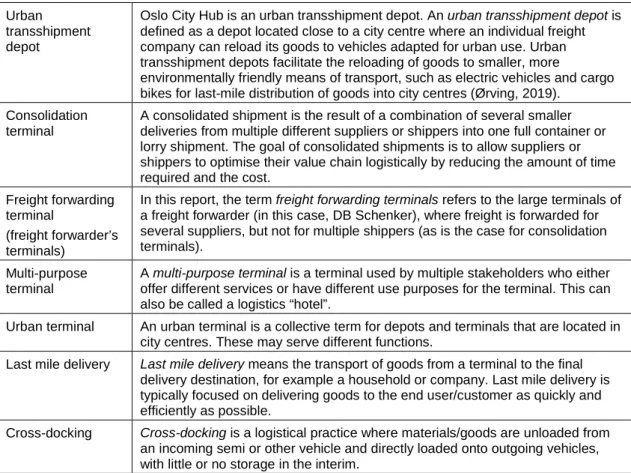
Title: Assessment of Oslo City Center - Planning and creation of a freight warehouse. Assessment of Oslo City Center - Planning and creation of a transhipment warehouse.
Background
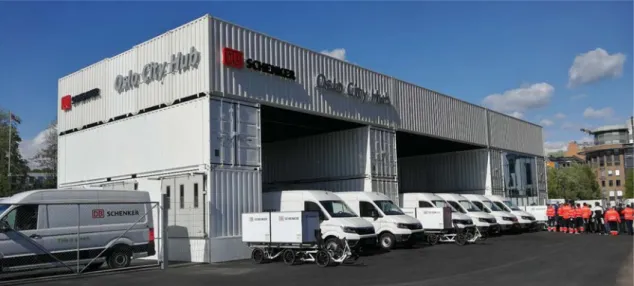
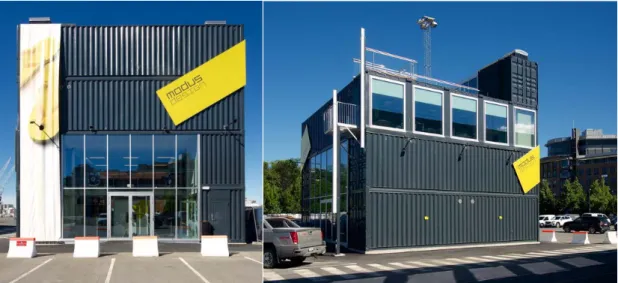
Filipstad Utvikling joined forces with DB Schenker and MMW architects to plan and create Oslo City Hub on this piece of land. DB Schenker's goal is for 80% of its deliveries within the Ring 3 area in Oslo to be carried out by zero-emission vehicles by 2019, and Oslo City Hub is an important part of achieving this goal.
Purpose
Structure of the Report
Glossary
The evaluation was carried out in the form of a case study, where the aim was to study the process from the concept of an urban transfer depot to the creation of Oslo City Hub. The study is qualitative, and the aim was to gain more insight into the stakeholders involved in the process, how and why they were involved in the planning and the roles they played in the establishment of Oslo City Hub. In order to gain detailed knowledge about this, interviews were conducted with a broad cross-section of key stakeholders involved in the establishment of Oslo City Hub during the planning process.
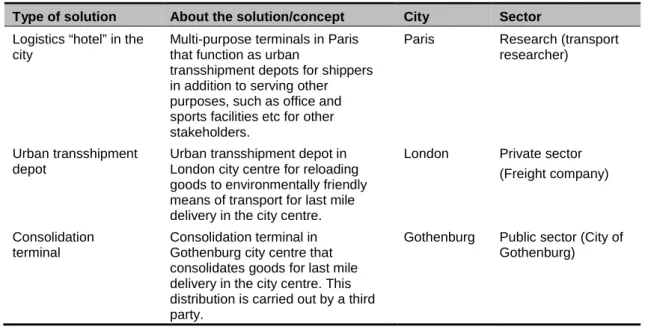
Information was collected on activities, plans and processes involved in the establishment of Oslo City Hub in the form of interviews with landowners (Port of Oslo), tenants (DB Schenker Norge AS), partners (Kolonial AS), architects (MMW architects), project developers (Moment Eiendom and Filipstad Utvikling) and Oslo City Council (City of Oslo Planning and Building Services and the Urban Environment Agency) to raise the level of knowledge about the process behind the establishment of an urban transshipment depot. That is why we interviewed European experts involved in the establishment and operation of different types of urban terminals in Paris, London and Gothenburg.
The need for urban transshipment depots and other urban terminals
At the same time, logistics facilities are mostly located in the suburbs (Aljohani and Thompson, 2016). The development of logistics expansion can contribute to an increase in the number of kilometers driven and thus negatively impact the environment (Aljohani and Thompson, 2016; Diziani et al, 2012). Transshipment terminals and other types of terminals in the city center can help reduce the impact of logistics sprawl and urban mileage.
Urban logistics terminals help enable freight from large warehouses and forwarding terminals in the suburbs and rural areas to be transported with fewer larger vehicles to the city center, while enabling last-mile delivery with smaller vehicles adapted to the urban environment. the environment. It should also be placed close to the highway network so that vehicles supplying the terminal with goods will avoid unnecessary driving through the city center.
Expert knowledge from similar attempts
A consolidation terminal in Gothenburg city centre, consolidating goods for last-mile delivery in the city centre. The Gothenburg respondent is from the public sector and initiated and participated in the process of opening a consolidation terminal in Gothenburg city centre. In order for land to be used for logistics purposes, this must be included in the overall city planning processes.
According to the interviewee from Paris, shipping companies in Paris still feel that logistics terminals in the city are expensive and complex. In Paris, the municipality is quite active when it comes to logistics areas and logistics activities in the city.
Background
Kolonial (one of Norway's largest home delivery grocers), who wanted to establish a presence in the Oslo City Hub, eventually became involved in the project. Kolonial expresses that when the economy is unfavorable and companies like Kolonial cannot take advantage of subsidies, market value is the only advantage of being part of the Oslo City Hub. DB Schenker and Kolonial were key contributors to the design of the Oslo City Hub.
Currently, DB Schenker is the only one using the Oslo City Hub, but the intention is for other interested parties to establish a presence in the area made available by Filipstad Utvikling. From the beginning of planning, the target for completion of the Oslo City Hub was April 2019.

Concept and functionality
Is an urban transshipment depot like Oslo City Hub the right solution in the future or should larger freight forwarding terminals be invested. For example, the work involved in planning and preparing Oslo City Hub for the launch took around 1.5 man years for DB Schenker according to the company itself. Significant costs were also incurred in connection with the land lease for Oslo City Hub as real estate prices in the area are high.
In addition, DB Schenker has invested in 8 new electric delivery vehicles to be used for distribution in the Oslo City Hub. At the same time, the distribution solution from Oslo City Hub will help to reduce.
Design of the terminal
Various project meetings have been regularly held in connection with the design of Oslo City Hub to discuss it. The footprint of Oslo City Hub is 36 * 12 meters, including charging space for the electric vehicles. There will be a need for land for van parking along the long side of Oslo City Hub and for semi-parking on one short side.
Oslo City Hub is located in an area where it will eventually become part of a larger environment. In this chapter, we start with a presentation of the stakeholders who played the key roles in the creation of the Oslo City Hub and describe their collaboration (chapter 5.1).
Stakeholders involved and their roles
The main objective of the Port of Oslo is to ensure efficient and rational port operations. During the entire planning process, Filipstad Utvikling has been in continuous contact with the Port of Oslo regarding the progress of the project. Filipstad Utvikling finds that the Port of Oslo has been an active participant in the process and an important stakeholder when it comes to the realization of the concept.
The Port of Oslo received money from Filipstad Utvikling as construction of the depot began. The Port of Oslo also finds the time considerations for the lease period challenging.
Input from Oslo Municipality
Filipstad Utvikling believes that the cooperation with DB Schenker has worked well and explains that he has had a close dialogue with DB Schenker since June 2018, when DB Schenker started with one container and 3 electric cargo wheels. Filipstad Utvikling and DB Schenker were also in frequent contact with the authorities, both together and individually. According to Filipstad Utvikling, the fact that they could not sign the contract with DB Schenker by the end of March 2019 presented a challenge to the planning process.
In order to make progress towards the planned opening of Oslo City Hub in spring 2019, Filipstad Utvikling had to take a financial risk, including involving various consultants and ordering the necessary materials. Filipstad Utvikling believes that both parties are focused on solutions and believes that the results are positive.
The time aspect
During the period starting with the establishment of Filipstad Utvikling and the signing of an agreement of intent with the Port of Oslo (May 2018) until the date when the building permit application was sent to PBE (February 2019), the site use plan was significantly changed (see Chapters 4.1 and 4.2). An agreement for the final construction of the Oslo City Hub was concluded between the Port of Oslo and Filipstad Utvikling. This is a step-by-step solution, which means that every time Filipstad Utvikling modifies the building construction, the lease agreement for the building footprint is modified accordingly.
The agreement with the Port of Oslo expires in April 2021, but Filipstad Utvikling hopes to extend it or move the construction further on the Filipstad plot. Filipstad Utvikling hopes that the operation of Oslo City Hub will demonstrate that the solution benefits the city as a whole.

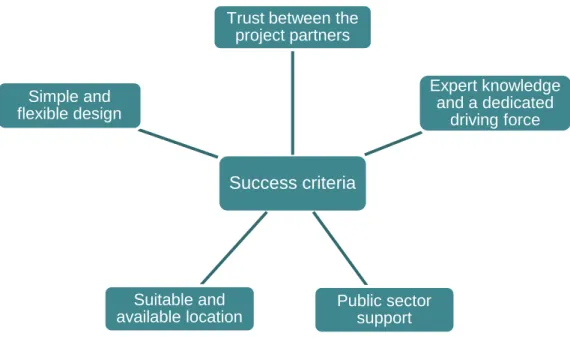
Critical components in the planning process
The municipality of Oslo has offered to contribute to the project by facilitating the supply of electricity. The Municipality of Oslo has played a minor role since a tender for the area was announced in a public competition by the Port of Oslo. A driving force (major stakeholder with financial strength) and a team of professional stakeholders responsible for their individual parts of the planning and completion process up to the opening of the terminal have been important.
Colonial further specifies that access to recharging points in the city center will improve its ability to replace a greater part of the vehicle fleet with electric alternatives and reduce the average number of kilometers driven. In this chapter, we summarize the main findings from the report and present the success criteria identified for creating an urban transport hub like the Oslo City Hub (in Chapter 6.1), present an overview of the most important challenges (in Chapter 6.2) and, finally last but not least, discuss the possibility of transferring the idea to other private sector actors or municipalities wishing to create a similar structure (in Chapter 6.3).
What is important for the establishment of an urban transshipment depot in the
According to Filipstad Utvikling, architects of MMW and DB Schenker, the participation of a logistics actor in the planning of Oslo City Hub was essential to ensure a functional design for Oslo City Hub. adapted for incoming and outgoing traffic and loading (see Chapter 4.2). Convenient and available locations for urban transport depots in city centers Without access to downtown areas, a concept like Oslo City Hub cannot be completed. The collaboration on the Oslo City Hub project between the real estate company Moment Eiendom, MMW architects and DB Schenker ended well, giving relatively quick and successful results in the form of an urban transport depot.
After the end of the lease period, the land must be returned to the same condition as when the agreement was signed. Flexibility in design makes it possible to make changes in development, which is especially important whenever a new distribution solution is being tested.
Challenges to completion
Given the short lease period for the area, a construction method was needed that could facilitate rapid construction once the building permit was in order along with. The construction makes it possible to move Oslo City Hub to another location if necessary. Considerable flexibility in the urban transfer depot and the surrounding area also reduces the risk for the tenant if new or additional tenants with other types of needs have to be recruited.
Opportunities to transfer the concept to other cities
Accessed by Tiltakskatalogen.no on 5 June 2019 at: https://www.tiltak.no/a-begrense- transportarbeit/a-2-infrastructure/bylogistikkplan/. 2017). Journal of the American Planning Association, J. https://www.researchgate.net/publication/254320081_Smart_Growth's_Blind_Side McKinnon A. Current and future land requirements of logistics activities. Copyright © Institute of Transport Economics https://www.oslo.kommune.no/politikk-og- administrasjon/politikk/slik-styres-oslo/#toc-4.
Tilgået den 11. juni 2019 på https://www.oslo.kommune.no/politikk-og-administrasjon/etater-foretak- og-ombud/plan-og-bygnningsetaten/. Tilgået den 13. juni 2019 på https://www.oslo.kommune.no/politikk-og-administrasjon/slik-bygger-vi-.