The opinions expressed at the workshop and in the proceedings are those of the participants and do not necessarily reflect the opinions of the Smithsonian Institution's Scientific Diving Program, the National Oceanic and Atmospheric Administration, or the American Academy of Underwater Sciences. This workshop features five council members who we will hear from later in the program. Although few early records exist, the evidence that the study of the underwater world was steadily evolving is indisputable.
The aim of the project using scientific diving is the advancement of science; therefore, the information and data resulting from the project are not subject to proprietary rights. We have elements of the diving population who have acquired a great deal of deeper diving experience. The length of the exposures, surface intervals and the depth profiles are all part of the “dose”.
In any case, the communication of the best available information to the widest member of the diving community is clearly in the safety of the divers. The development of the current position appears to be evolutionary in the sense that the logic of the position has grown from well-accepted roots in the diving industry.
S. Navy Diving Manual (Mar-1970)
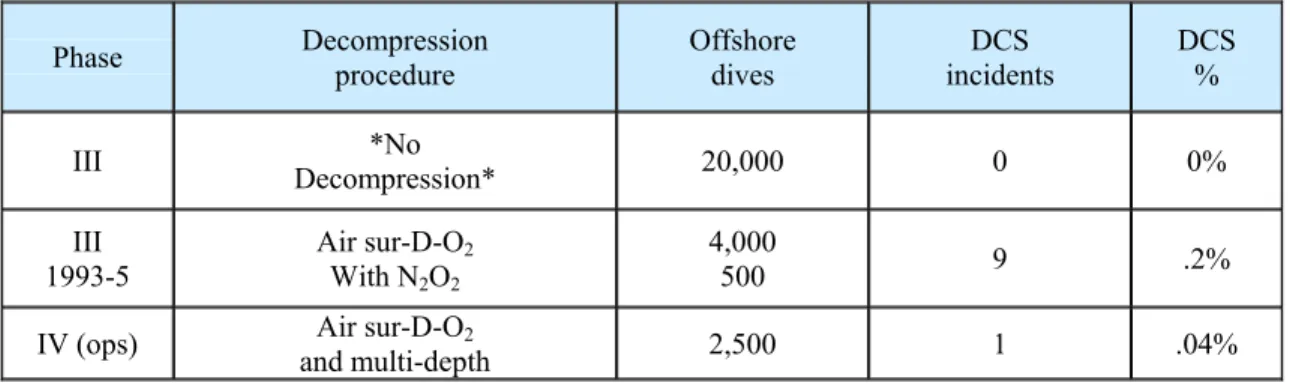
A brief history of how DCS and CNS oxygen toxicity risks have emerged and been managed in the US. During conversions, times were calculated with minimum PO2 (maximum PHe) at each depth.
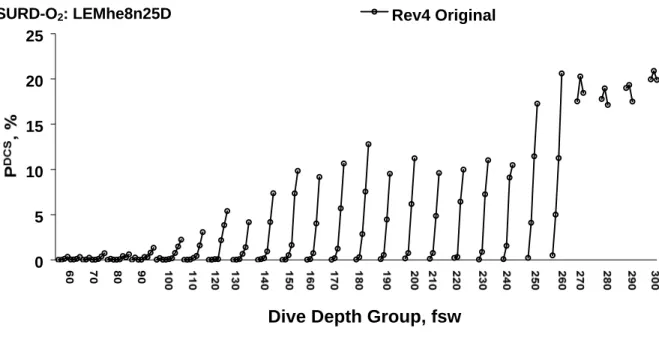
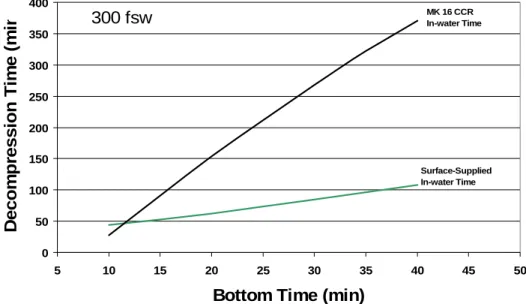
As in the 14-year period following the release of the 1970 He-O2 decompression tables, only a relatively small number of surface-delivered He-O2 dives were completed by Navy divers following the release of the 1991 tables. The LEMhe8n25 estimated DCS risks of the sur-D-O2 schemes without the modifications are shown in Figure 5. Surface mixed gas diving to 300 fsw would significantly expand the depth capabilities of the scientific diving community beyond the limitations of air and nitrox diving.
Commercial diving companies use a variety of surface mixed gas decompression tables, most of which are based on some variation of the USN partial pressure tables, and most commercial diving mixed gas decompression tables are based on variations of Haldane/ Workman decompression model.

MSW Scientific Dive
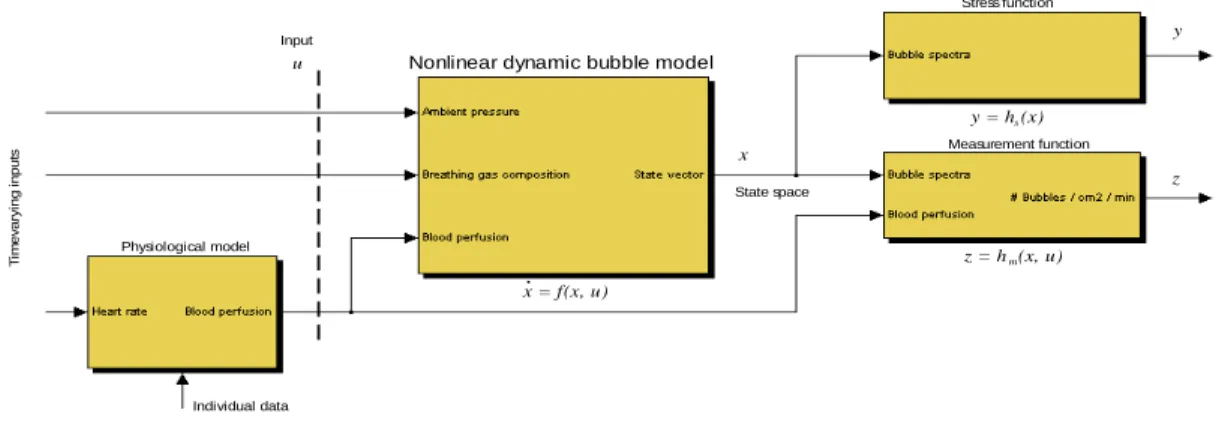
This is despite the fact that the pathophysiology of these conditions is likely very different. The principle behind Copernicus is to include additional measurements to support the validation of the model. The composition of the gas mixture can be continuously changed to achieve the fastest possible decompression time.
This was done by examining the decompression features of currently available dive computers to determine which would allow heliox or trimix diving to 300 fsw or deeper. Comparison of computer simulations with US Navy heliox decompression tables (using US Navy prescribed gas mixtures and depth switches) showed that in the most liberal mode the EMC-20H and VR3 exceeded the TDT required by the US Navy tables. Do you have a more complete description of the algorithm beyond what you have posted in the manual and on your website?
Do you think there should be anything added to the description of the algorithm beyond what you have posted in the manuals and on your website. Regarding additional information about their decompression algorithm, they stated: “The basic Bühlmann adjustment was compiled in 1988.
Single Gas
If any of the simulations did not meet or exceed the TDT requirements of the set table, then the software was adjusted until the TDT was met or the maximum level of conservatism was reached.
Decompression/Physiology Discussion Session
Ibert: In the revised table, do you still have the ability to switch to pure oxygen at 50 feet? For the surface supplied diver, you have all the computing power you need by moving the dive computer from the diver's hand to the surface. On the other hand, the validation of dive tables, especially in the deeper area, is also not very impressive.
People suspected difficulties were due to thermal problems or changes in the thermal status of the diver on the bottom during decompression. AAUS1 medical standards require age-based periodic examinations by a physician of the diver's choice. In Europe, much emphasis is placed on the qualifications of the examining physician, while in the United States there is practically no such emphasis.
Diving can be over the side or through the moon pool, a hole in the center of the ship. Using the arterial bubble assumption, it is shown that, at least for bubble aspects. Mixtures are selected according to the depth and given bottom values of PO2 and EAD.
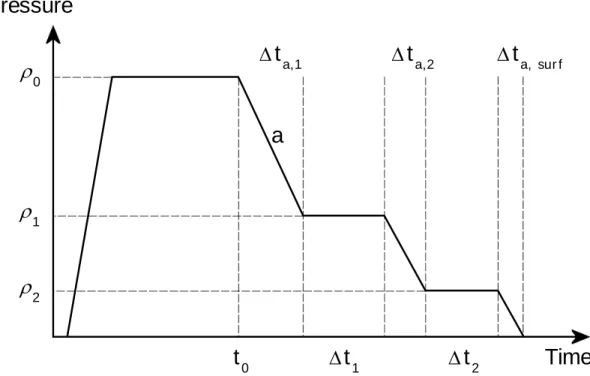
One can minimize the risk by remembering that this corresponded to the state of the art. Analysis of the jump charts shows that the dive profile controls the formation of bubbles and decides the safety outcome of the decompression. Longer bottom time tables and saturation dives, coupled with slow ascents, produce DCS-only type I pain in the final meters of decompression.
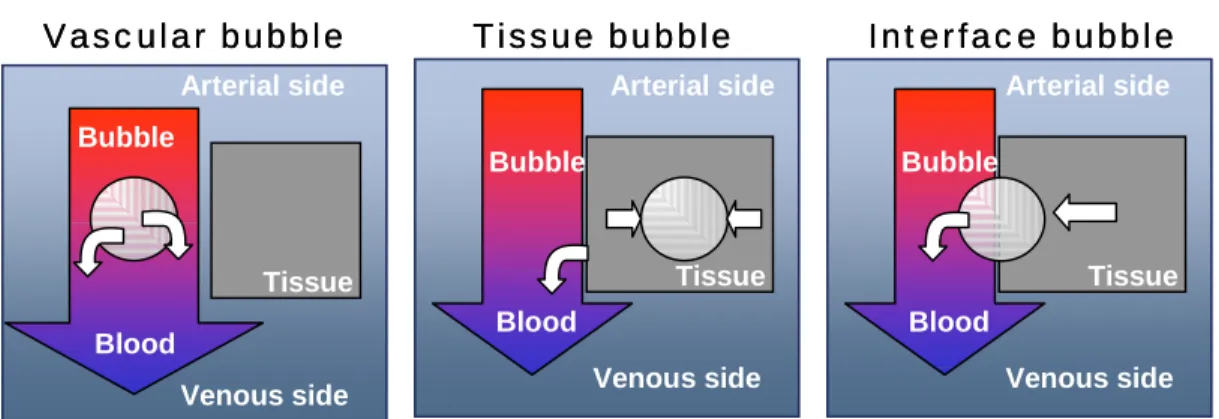
Data collected in the North Sea showed that if the overall incidence rate of the two diving methods is about the same. Upon recompression of the diver in the deck chamber, these bubbles reduce their diameter due to Boyle's law and pass to the arterial side, causing later neurological symptoms. Finally, the arterial bubble hypothesis provides an explanation for the criticality of the initial rise phase.
On the left, in the initial phase of decompression, an arterial bubble enters a tissue capillary network. On the right, in the final stage of decompression, a bubble has grown to a large volume using dissolved gas available in the surrounding tissue.
History of Trimix Table Development in France
Definition of the AB Model
Finally, the tissue gas exchange model requires only one parameter to be defined, corresponding to the slowest half-time. Technical diving is defined as "the use of advanced and specialized equipment and techniques to enable the diver to gain access to depths, dive times and specific underwater environments more safely than would otherwise be possible" (Palmer, 1994). Another key to success is divers maintaining good physical conditioning due to the harshness of the extreme environment and the bulk of the diver's clothing.
The divers descend to the research site and begin the diligent phase of the dive. One of the first sets of consensus diving standards was developed by the Scripps Institution of Oceanography at the University of California (Scripps) in the early 1950s. This method set the pattern for the future development of all AAUS scientific diving standards.
One of the second stages on the primary gas supply must be configured with a hose of sufficient length to facilitate effective emergency gas distribution in the intended environment. As was the case in each of the topics listed above, the original standards for closed- and semi-closed circuit scuba (Rebreathers) were included in the 1984 version of the AAUS manual. Rebreathers are defined as any device that recovers some or all of the exhaled gas in the breathing loop and returns it to the diver.
The extent of this program should be directly related to the complexity of the planned refresh diving operations. A surface/submersible valve in the sound assembly, which allows the breathing loop to be sealed off from the outside environment when not in use. The CCR should be equipped with manual dilution and oxygen supplemental valves to enable the diver to maintain safe oxygen levels in the event of failure of the primary power supply or automatic gas addition systems.
Use of any method approved for open circuit breathing air above the maximum working depth of the supply gas. The complexity and scale of such systems is directly related to the depth/time profile of the mission. The loop must be disinfected between each use of the same rebreather by different divers.
The problem may be that some members of the organization have been mislabeling their dives since reporting began, before the definition of the statistic. AAUS statistics indicate a strong trend of increased rebreather use (825% increase) over the past 7 years.