Background
Purpose
Scope of work
Limitations
Oil spill response, including oil operation simulations, has not been part of the work, as it is covered by other TFOPP work measures. Measures relating to shuttle tankers and vessels sailing on the high seas are not part of the work as they are covered by other TFOPP work measures.
Terms and definitions
In this regard, capping and containment equipment is considered a risk reduction measure with regard to hydrocarbon emissions into the marine environment. Similarly, early detection equipment for leaks and spills is considered a risk reduction measure with regard to further releases of hydrocarbons into the marine environment.
Follow-up of this work
The report shows that extensive research and development initiatives have been ongoing for several decades related to increasing the safety of offshore oil activities in Arctic and cold climate regions. The project covers a wide area with the aim of presenting a comprehensive overview of ongoing and planned measures related to the prevention of oil pollution in the Arctic marine environment due to offshore oil activities.

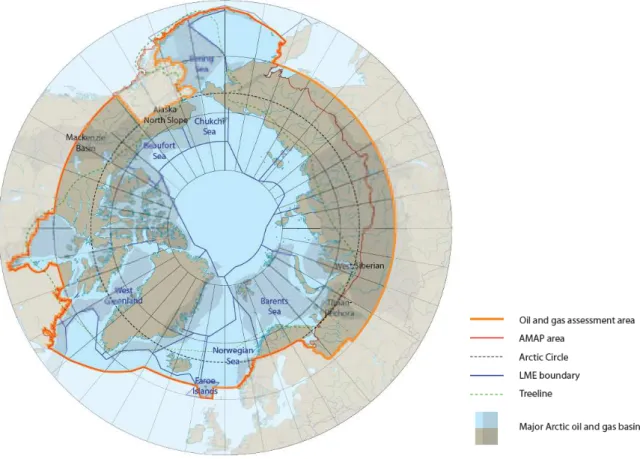
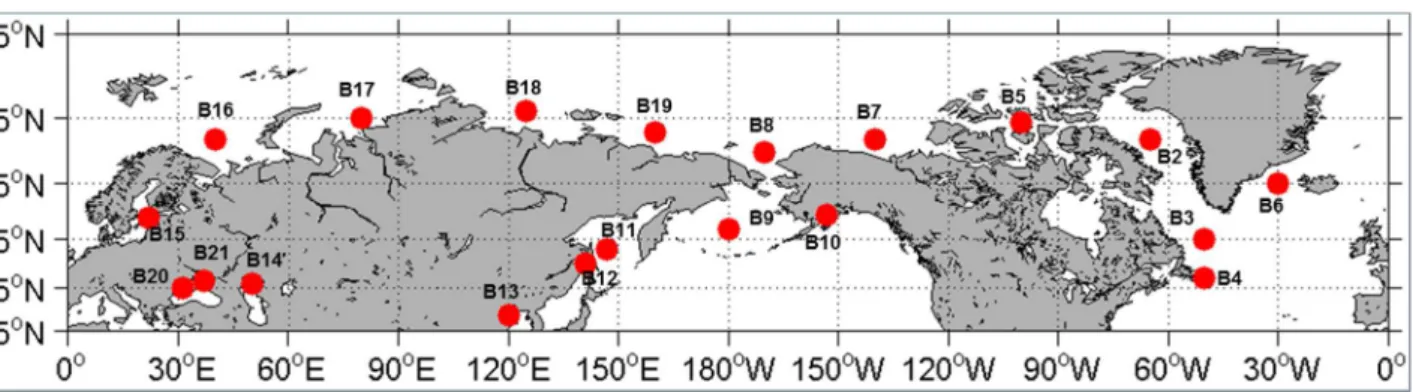
Arctic and cold climate regions
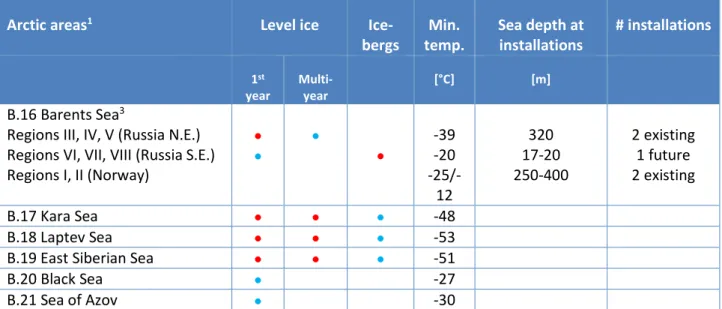
For the purposes of this report, the areas described in ISO are considered to be most relevant to offshore petroleum activities in the Arctic. However, technology developed and R&D activities related to these areas may be of interest to Arctic offshore petroleum activities and are therefore included in this report.
Specific conditions for the Arctic regions
- Daylight
- Visibility
- Temperature
- Icing
- Wind and wind chill
- Precipitation and snow
- Polar lows
- Water depths
- Waves
- Ocean currents
- Sea ice and icebergs
- Seabed conditions
- Distance
The temperature of sea water in the Arctic and in cold regions is low most of the year. Precipitation in the Arctic and cold regions falls as rain and snow, although the amount.
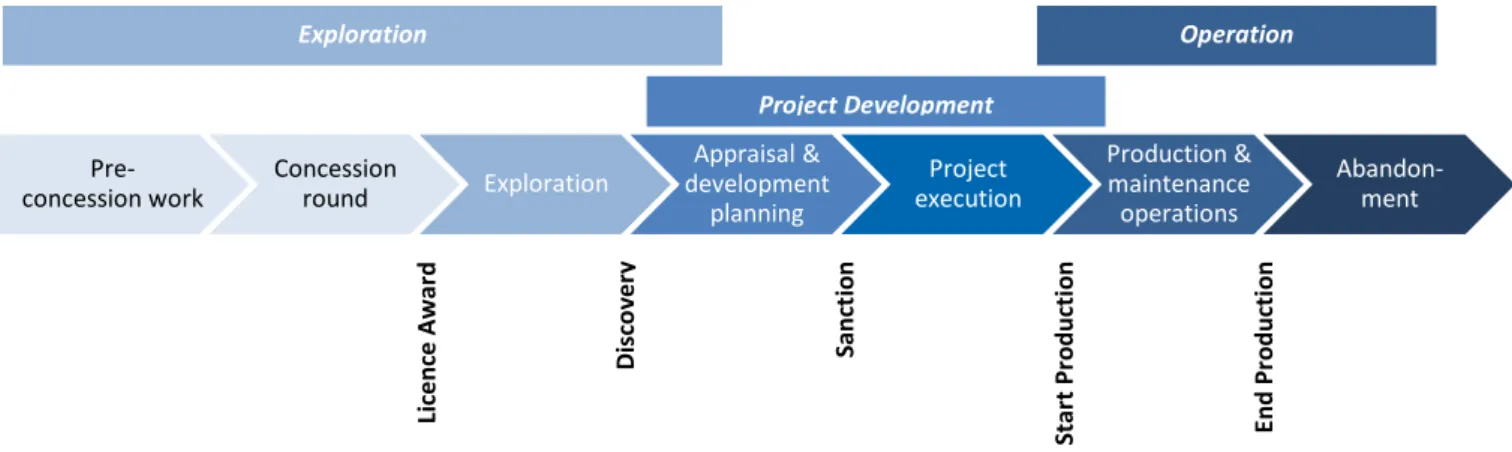
Stages in offshore petroleum exploration and development
The main concepts for Arctic exploration and development are then described, along with adverse events that may cause acute marine pollution from such development. This step is part of prioritizing which issues will be included in the project, see Figure 5.
Relevant exploration and development concepts
- Fixed structures
- Floating structures
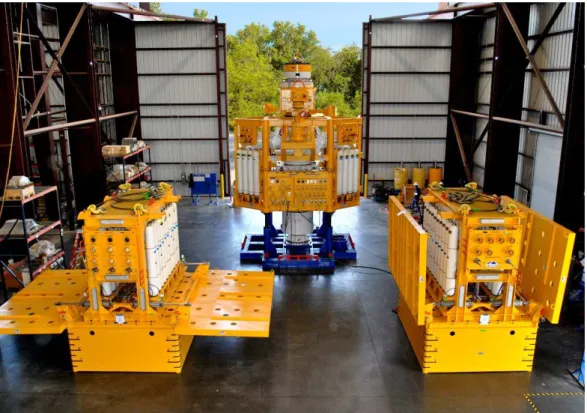
- Subsea structures
- Extended reach wells from shore
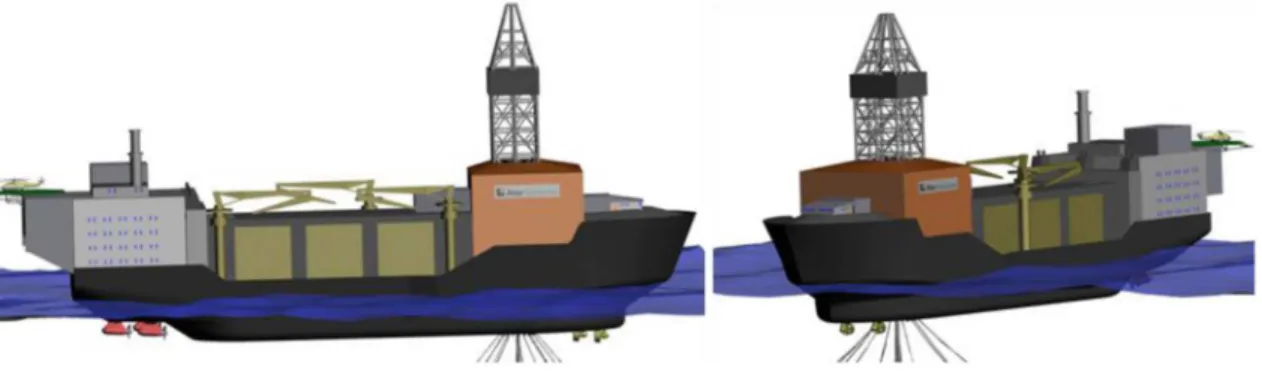
This concept is applied for example at offshore Sakhalin in the Okhotsk Sea, in Newfoundland (Hebron and Hibernia) and the Pechora Sea, and was previously used as a drilling concept in the Beaufort Sea. Floating, production, storage and offloading (FPSO) or floating, storage and offloading (FSO) systems are typically ship/ship-shaped vessels and store crude oil in tanks located in the hull of the vessel.
Undesirable events
Each of these events can be linked to one or more of the main groups of concepts relevant to exploration and development in Arctic and cold climate regions described in the previous section. In this section, an overview of the main sources of relevant information for this project is presented.
Response from the baseline survey
The report attempts to provide a broad overview, covering the key areas within the scope of work. This is achieved through the approach taken, but due to the breadth of the issues examined, the report may not have managed to cover all existing, ongoing or planned initiatives.
Conference papers
OMAE - ASME International Conference on Ocean, Offshore and Arctic Engineering (http://www.asmeconferences.org/conference-home/OMAE.cfm). POAC – International Conference on Port and Ocean Engineering in Arctic Conditions (http://www.poac.com/.
National Petroleum Council (NPC) Arctic Potential Report
Journal of Cold Regions Science and Technology (http://www.journals.elsevier.com/cold-regions-science-and-technology/). De International Symposiums on Ice onder de IAHR-organisatie (http://www.iahr.org/site/cms/contentviewarticle.asp?article=658).
The Russian – Norwegian Oil & Gas industry cooperation in the High North
The report lists existing oil and gas projects operating in Arctic environments, relevant Arctic design standards, and research and joint industry programs related to Arctic technology. The report has several study topic papers attached, which look more closely at the details of e.g. ice handling and development drilling.
Barents 2020
Recommended literature
The goal of the timeline was to identify research and development needs for oil and gas development in the Arctic and sub-Arctic regions. Technological challenges and state of knowledge: PSA published a report on technological challenges and state of knowledge to reduce the risk of adverse events causing acute marine pollution related to offshore oil activities in the Norwegian part of the Barents Sea (PSA, UiS and IRIS, 2010 ).
Metocean and ice conditions
Weather forecasting
Ocean Current Modeling: The Simula / KALKULO Research Laboratory conducts a project that examines the scientific and modern basis for ocean current modeling with the goal of. Reference information on the state of physical oceans and regional seas: The Copernicus Marine Environment Monitoring Service (CMEMS) provides regular and systematic reference information on the state of physical oceans and regional seas.
Technology for metocean data collection
Ice management
- Ice forecasting, detection and monitoring
- Station-keeping in ice
- Physical ice management
- Disconnection
One part of the PRNL ice management program (PRNL, 2014) focuses on station retention in sea ice. One part of the PRNL ice management program (PRNL, 2014) focuses on the towing of icebergs in sea ice.
Drilling technology, well integrity and well control
Drilling technology and well integrity
Mud weight control during drilling in the Arctic: In the Arctic, permafrost and sediments containing gas hydrates under the seabed present a technical difficulty in drilling. These can provide more robust wells, which will be a requirement in the sensitive Arctic.
Well control
The stop stack functioned properly at pressures that exceeded the highest expected pressures that Shell may encounter in the Arctic. Capacities of the stope stack and containment dome must meet requirements specific to the characteristics of the proposed well.
Pipelines and subsea structures
Pipeline and subsea structure integrity
According to Georghiou et al. 2015), future designs should look for a more complete model of the given scenario to reduce unnecessary conservatism. Shear data was collected from less than half of the area shown in the mosaic.
Pipeline integrity monitoring and leak detection
2015) presents the detectability and operating principles of fiber optic cable systems in the Arctic, including lessons learned from using them in previous projects. Furthermore, the paper covers operating principles and technology status of leak monitoring systems for Arctic pipelines.
Facility design
- Ice loads
- Ice model testing
- Material selection
- Winterization
The project will design protection methods and assess the need for other types of drilling units than those currently used in the Norwegian part of the Barents Sea. The ice model test shows that the concept is capable of operating in the tested ice conditions.
Loading and offloading
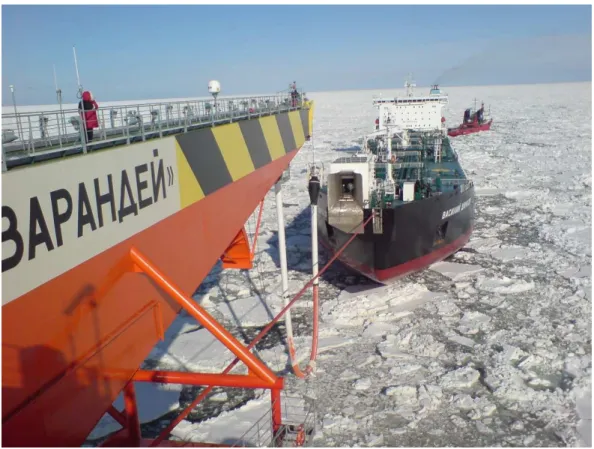
For periodic inspections or maintenance, the insulation blankets can be easily removed and replaced if necessary. Stamas Engineering Arctic Pads: Arctic pads are heated rubber mats that provide a durable, non-slip surface for arctic and harsh environments and can be used on stairs, platforms, landings, escape routes, assembly stations, ship and upper decks, oil rig floors etc.
Communication solutions
Communication in the High North and other remote areas (COINOR) The primary objective of the COINOR project is to minimize the knowledge gap about telecommunications in the High North, in order to provide sound recommendations on how to overcome the current lack of infrastructure and technological solutions lit ( Bekkedal and Fjørtoft, 2014. The MARENOR result will be a tool for predicting navigation and communication system performance in the High North.
Human resources and competence
Management
Oil spill detection
Much work is being done in the field of oil spill detection to develop remote sensing technologies to monitor oil under different conditions of ice and visibility. Oil Spill Detection and Management JIP (initiated 2014): The objective of the JIP is to improve oil spill management via communication infrastructure and management systems.
Development of new concepts for exploration and production activities
- Mobile offshore drilling units (MODUs)
- Drilling of exploration and production wells from land
- Seabed drilling rigs
- Subsea production systems
- Floating production units
- Support vessels for inspection and maintenance activities
The ice class is for a significantly extended drilling season for much of the Arctic - with an ice class of PC-4. Moss Maritime designs vessels with icebreaking and survivability capabilities to withstand the impacts of arctic extremes, such as Arctic environment drilling rigs, FPSO icebreakers, icebreakers, LNG icebreakers, gravity base barges (Moss Maritime, 2015).
International standards
International Standardization Organization (ISO)
- ISO 19906:2010 Arctic offshore structures (under revision)
- ISO TC67 SC8 Arctic operation standards (under development)
The ISO Arctic offshore structure standard specifies requirements and provides. recommendations and guidance for the design, construction, transportation, installation and removal of offshore structures, related to the activities of the oil and natural gas industry in arctic and cold regions. The standard specifies requirements and provides recommendations and guidance for the collection, analysis and presentation of relevant physical environmental data for arctic activities in the oil and natural gas industry in the arctic and cold regions.
International Maritime Organization (IMO)
- Polar Code
- MODU Code
- Guidelines for ships operating in polar waters
Arctic Council
National standards
- American Petroleum Institute (API)
- Canadian standards
- Russian standards
- Norwegian standards
The standard applies to the design and assessment of complete structures, including substructures, superstructures, ship hulls, foundations, mooring systems, risers and subsea installations for all types of offshore structures used in petroleum activities, including bottom-based structures and floating constructions. The standard applies to the different phases of construction (namely manufacturing, transportation and installation), to the use of the structure during its intended life, and to its abandonment.
Classification societies
- American Bureau of Shipping (ABS)
- Bureau Veritas
- DNV GL
- Lloyd’s Register
Guidance NI 565 Ice characteristics and interactions between ice and structure (2010): The purpose of the guidance note is to collect and provide data on the ice (physical and mechanical properties) and to provide some guidance in the calculations of the forces generated through the ice on ships and. Some of the identified centres, forums, portals, projects and programs focusing on development and operations in the Arctic are listed below, in alphabetical order.
ABS’ Harsh Environment Technology Center (HETC)
Various forums and portals exist where one goal is to collaborate with other partners to acquire and share knowledge and competence regarding Arctic field development and operations. Furthermore, there are several centers, projects and programs that focus on R&D activities related to offshore petroleum.
Arctic center for unmanned aircraft (ASUF)
This section brings together the in-depth information gathering, in addition to the information structuring and documentation steps, see Figure 17.
ARCtic Petroleum Exploration (ARCEx)
Arctic Info – Strategic Environmental Impact Assessment of development of the Arctic
Autonomous Marine Operations and Systems (AMOS)
Barents Sea Exploration and Cooperation (BaSEC)
BarentsObserver
BarentsWatch
Centre for Arctic Resource Development (CARD)
Centre for Integrated Remote Sensing and Forecasting for Arctic Operations (CIRFA)
Chevron's Arctic Center
ColdTech – Sustainable Arctic Technology
DrillWell – Drilling and Well Centre for Improved Recovery
High North HSE challenges project by the Norwegian oil and gas association
INTSOK
Lloyd's Register applied technology group; polar technologies
LOOKNorth
Maritime Surveillance in the Northern Sea Basins (MARSUNO)
NRC’s Arctic program
Petro Arctic
Petroleum Research Newfoundland & Labrador (PRNL)
Polar View
Shell Ice and Weather Advisory Center (SIWAC)
Sustainable Arctic Marine and Coastal Technology (SAMCoT)
Presented at the Norwegian Oil and Gas Association's HSE Challenges at the High North 5 workshop on emergency preparedness, 2-3 June 2014 (in Norwegian). Presented at the Norwegian Oil and Gas Association's HSE Challenges at the High North 6 workshop on maritime logistics, infrastructure and ice management, 17-18 June 2014.
Abbreviations
National Research Council NRC CHC - Canadian Hydraulics Center NRC IOT National Research Council - Institute of Ocean Technology National Research Council NRC OCRE - Ocean, Coastal and River Engineering. RU-NO Barents project Cooperation of the Russian-Norwegian oil and gas industry in the High North project.
Cover letter
Questionnaire
Are you collecting and/or registering relevant data for the Arctic regions. If you can provide names, we would appreciate hearing about key partners in your Arctic projects.
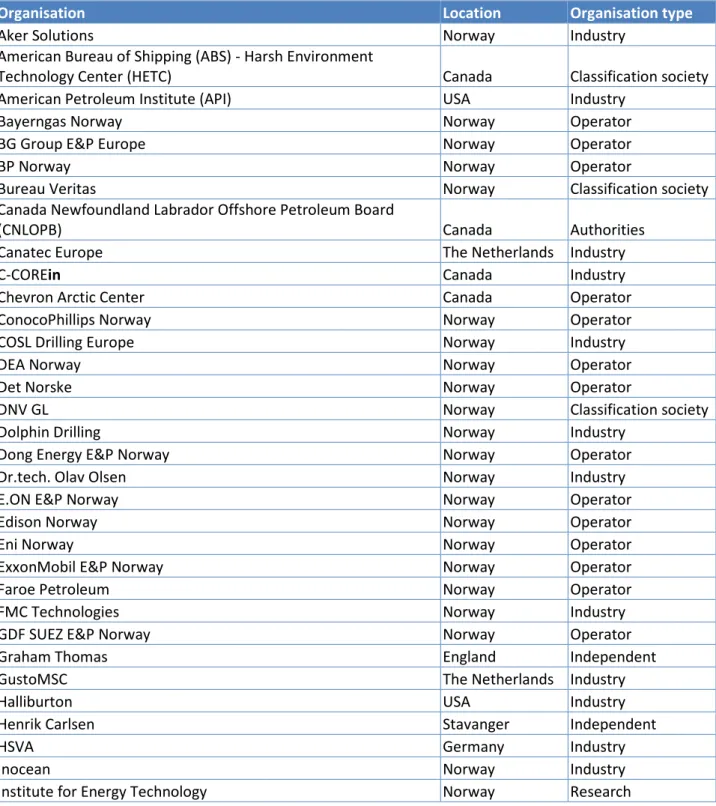
Overview of respondents to the baseline survey
Technology implemented in Arctic areas
Process area with heating and mechanical ventilation. http://www.statoil.com/no/Pages/def ault.aspx).
Undesirable events
Catalogue overview of measures identified
The Center for Integrated Remote Sensing and Forecasting for Arctic Operations (CIRFA) project started in 2015 and will run for a maximum of eight years. The main objective of the center is to develop knowledge and technology for monitoring maritime conditions and. However, for various reasons, only the SALTO JIP was initiated. The SALTO JIP will provide a PC simulation tool for risk-based, probabilistic design to help industry prepare for the environmental conditions (wind, fog, ice, icing) in the Arctic and henceforth the operation of ships and offshore optimize structures.