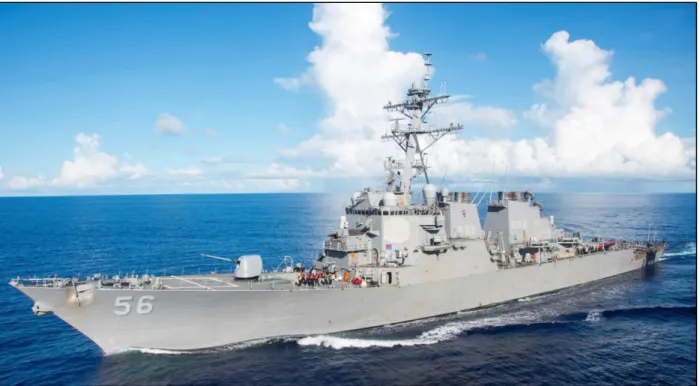
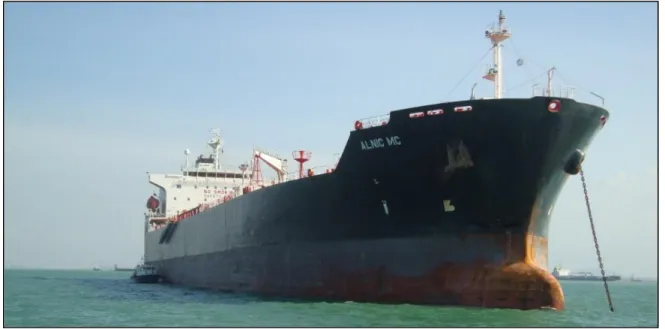
John S McCain was overtaking Alnic MC in the westbound lane of the Singapore Strait Traffic Separation Scheme when the destroyer suffered a suspected loss of steering gear. As the crew attempted to regain control of the vessel, the John S McCain inadvertently turned to port into the path of the Alnic MC.
Overview
About a minute later, starboard propeller thrust control was transferred to the leeward control station. Once positive steering control of the John S. McCain was re-established in the aft steering, the watchmen moved the rudders 15 degrees to starboard as ordered from the bridge.
The Vessels
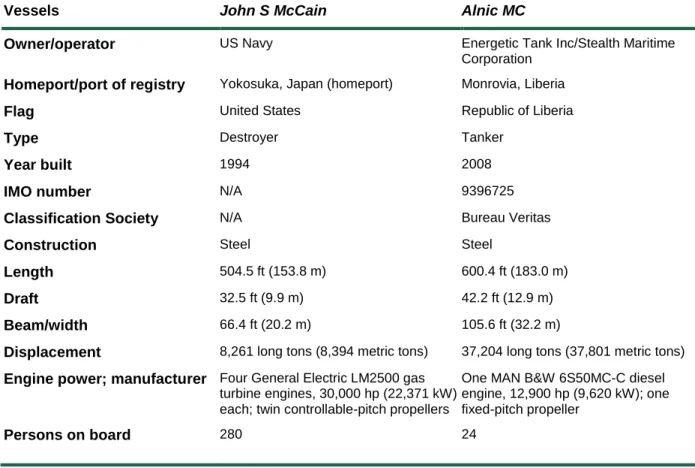
John S McCain
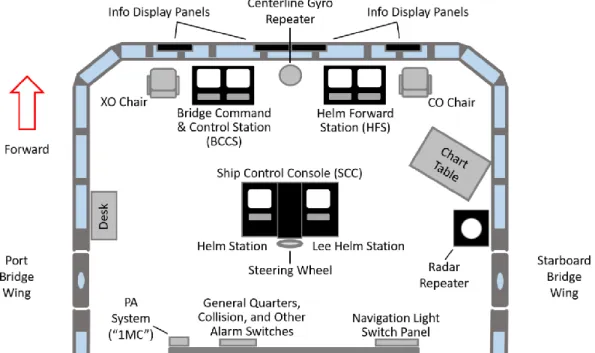
The procedure for a coordinated transfer of direction between bridge stations was provided in the IBNS technical manual, but was not provided as an ongoing operating procedure in the EOSS manual held on station at SCC and ASU.7. At the steering station of SCC and ASU - stations equipped with a physical rudder - the positions of the rudders after a steering control transfer were determined by the rudder position of the winning station.
Alnic MC
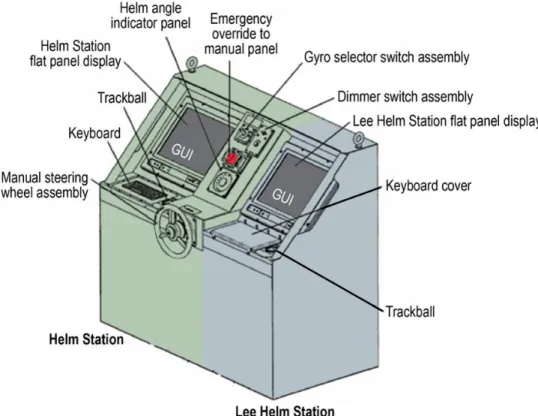
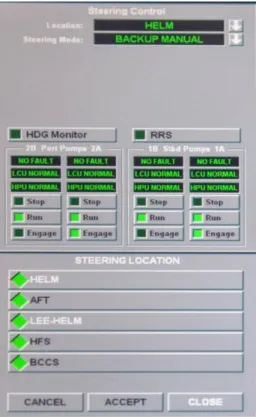
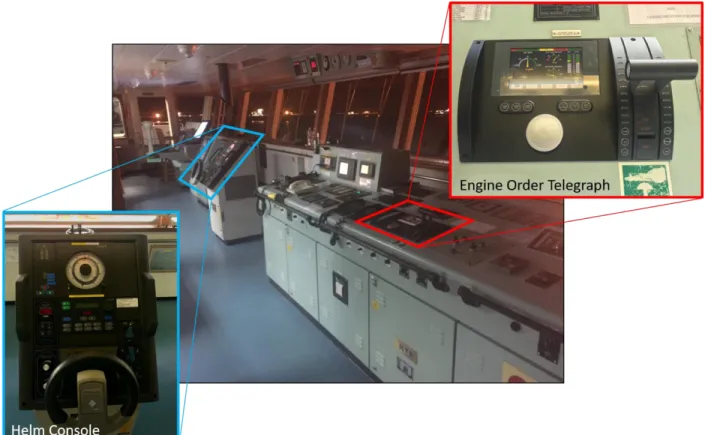
According to the technical manual and as demonstrated to National Transportation Safety Board (NTSB) investigators on another Navy destroyer equipped with the IBNS, at any time a watchman at any of the other stations could unilaterally take over steering control. Steering could be done manually, on autopilot and without follow mode.9 Engine orders from the bridge were sent to the engine control room via an engine order telegraph mounted on a separate console.
Preaccident Events
John S McCain
At 01:15 on August 21, the ship's supervisor, John S. McCain, came to the bridge because he expected heavy traffic and frequent calls to come to the bridge. The Boatswain's Mate on the Watch (BMOW) had direct control over the coxswain and ensured that the coxswain acted as directed.
Alnic MC
This guard requirement required one commissioned officer of the watch and one or two ratings. One of the officers must have been the master or chief officer who steered the vessel and supervised the watch. Observation condition 3 was usually set during times of poor visibility and heavy shipping, when the vessel was in restricted waters, entering or leaving a port, or in certain geographic areas of the world, including the Singapore Strait.
Accident Events
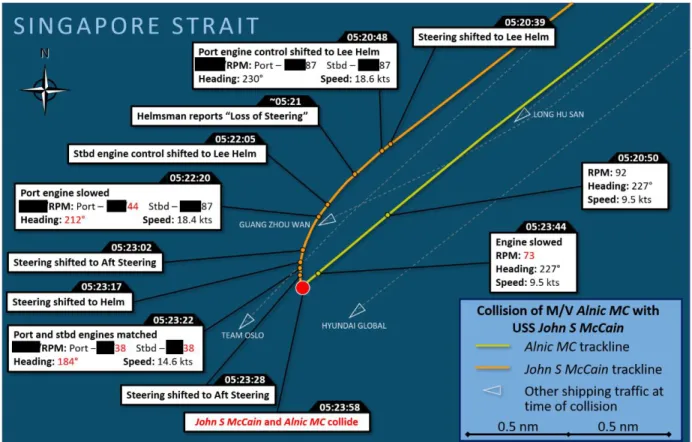
According to the thrust log, by 05:22:05 the starboard propeller control had been moved from the helm to the leeward helm station. Lee, the helmsman, told investigators that he had transferred control of the starboard side by himself by reaching into the helm station to initiate the transfer of control. The bulbous bow of the Alnic MC struck the John S McCain at the waterline aft amidships on the port side.
Navigation Equipment
John S McCain
When it became clear to the master of the Alnic MC that the John S McCain was not going to pass in front of his ship, he went to the tanker's engine order telegraph to reduce the engine speed. According to Alnic MC's VDR, at 05:23:44 the tanker's shaft speed decreased to 73 rpm, corresponding to half ahead, while the vessel remained on a heading of 227 degrees. Based on video of the rear drive from the destroyer, the Alnic MC struck the John S McCain at 05:23:58.
Alnic MC
Personnel
John S McCain
On the accident date, he came to view as part of the amended navigation detail on 0418. The mate on watch at the time of the accident enlisted in the Navy in February 2017 and joined the John S McCain on 27 May 2017. The helmsman who was on watch at the time of the accident joined the Navy in the summer of 2016.
Alnic MC
The BMOW on watch at the time of the accident entered the Navy in the summer of 2015 and came under temporary assignment to John S. McCain of Antietam. He said he had made many voyages in the waters where the accident occurred, and was in charge of the navigational watch at the time of the collision. The common seaman was also assigned to watch on the bridge at the time of the accident.
Training and Qualifications
John S McCain
He came on board the Alnic MC on 9 April 2017 and this was his first contract on board the vessel. He came on board the Alnic MC on 12 April 2017 and this was his first contract on board the vessel. He joined Alnic MC on 12th April 2017 and this was his first contract on the ship.
Alnic MC
The prospective helmsman had to demonstrate the movement of control units and the transfer of control to and from the "alternate control location". The windward coxswain qualification was a prerequisite for the coxswain qualification. The prospective windward coxswain was required to demonstrate positioning the throttles to achieve commanded speed, engaging and disengaging the throttles, and transferring throttle controls to and from the "engine control station." There were no specific steering or thrust control tasks in the BMOW PQS; however, coxswain and leeward coxswain were a requirement for BMOW qualification.
Work/Rest History
John S McCain
As part of their qualifications, prospective helmsmen and lay helmsmen were required to outline their duties during normal operations and describe how the helm and SCC were used by the watchstanders. IAW EOSS.” The PQS booklet did not include a task to transfer throttle controls between bridge stations.
Alnic MC
Alcohol and Other Drug Use
Injuries
Damage
Hull damage to John S McCain. Photos by Navy Mass Communication Specialist 2nd Class Joshua Fulton). Damage to the Alnic MC included a rupture of the hull, approximately 8 feet long, at the starboard bow approximately 20 feet above the waterline and indentation in the plating on the ball bow, bow stem and just aft of the bow stem on the port and starboard sides.

Waterway Information
Environmental Information
Navy Actions Since the Accident
Sharing lessons learned from accidents and post-accident engineering design, review tabletop lessons with surface force and naval commanders, individual vessel crews, and naval education and training commands. Operations specialist is an enlisted rating that specializes in operating equipment in CIC on a naval ship.
Exclusions
Actions Precipitating the Collision
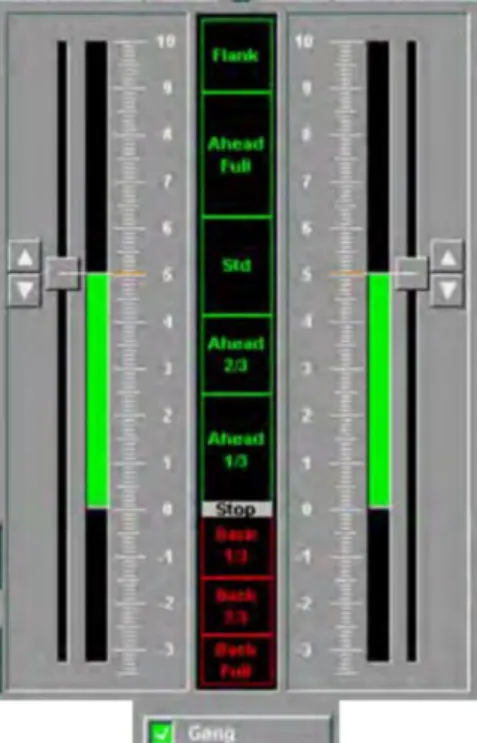
The NTSB concludes that although the helmsman observed a loss of steering, there was no evidence of a malfunction in the John S McCain steering system. The NTSB concludes that the John S McCain's throttle mismatch resulted in an accelerated turn rate to port toward the Alnic MC. The NTSB concludes that John S. McCain's bridge team failed to monitor the mate's response to commands and therefore failed to recognize that the throttles were mismatched.
Actions to Avoid Collision
As John S McCain's actions became unclear, the Alnic MC master could have called in the destroyer to clarify the vessel's intentions. However, the Alnic MC master had no knowledge of the perceived loss of steering control on board the John S McCain. The NTSB concludes that the Alnic MC bridge was not manned in accordance with the requirements of the company's SMS.
John S McCain Integrated Bridge and Navigation System
Under "general design guidelines," the ASTM F1166 standard states that "all critical and emergency controls shall be identifiable both visually and tactilely (for example, shape coding)." While the IBNS carried physical controls for steering - the wheels on the SCC rudder and the ASU stations - mechanical throttle controls were not provided. The NTSB concludes that the design of John S McCain's touchscreen steering and thrust control system increased the likelihood of operator errors leading to the crash.
Operating Procedures
They are often preferred over touchscreen displays as they provide both immediate and tactile feedback to the operator. By allowing other stations to unilaterally take steering control, the IBNS backup manual mode increased the potential for the error resulting in the inadvertent shift of control during the accident. Transmitting thrust control independently for each propeller shaft was unnecessarily complex, and the touchscreen throttle controls deprived the helmsman of tactile feedback when the throttles were unbound and mismatched.
Qualifications and Training of John S McCain Crewmembers
Statements by other coxswains and crew members of John S McCain who were not on watch at the time of the accident showed a similar lack of knowledge. Although the Antietam did not have the IBNS, the John S McCain CO qualified the crewman as coxswain and coxswain shortly after joining the destroyer. However, the standards for the helmsman, lee helmsman and BMOW watches on the John S McCain did not include a requirement to demonstrate a transfer of steering or thrust control between bridge stations.
Fatigue
Navy Oversight
The John S McCain crew's inability to respond effectively to the emergency calls into question the Navy's assessment and certification process. Additionally, despite significant research and universal standards in place in the marine industry, the Navy had no fatigue mitigation program or standards to ensure that crew members aboard the John S McCain had adequate rest. The NTSB concludes that the Navy failed to provide effective oversight of the John S McCain in the areas of bridge operating procedures, crew training and fatigue mitigation.
Findings
It is unlikely that the presence of additional guards on the Alnic MC bridge would have changed the outcome of the accident. John S. McCain's touchscreen thrust control and steering system design increased the likelihood of operator error leading to a crash. The Navy failed to provide effective control of the John S. McCain in the areas of bridge operational procedures, crew training, and fatigue reduction.
Probable Cause
This protected message for all Arleigh Burke-class destroyers equipped with IBNS, issued after the accident, provides instructions for configuring the IBNS. These proprietary reports contain the results of visual inspections of the John S. McCain's steering equipment after the accident. 37 Naval Personnel Development Command, Ship Control and Navigation Personnel Qualification Standard, NAVEDTRA 43492-2J, Norfolk, VA: Department of the Navy, 2017, p.
![Figure 1. Accident area. (Adapted from National Geospatial-Intelligence Agency [NGA] Chart 71265; inset background by Google Earth Pro)](https://thumb-eu.123doks.com/thumbv2/9pdfnet/19359693.0/11.918.110.802.397.769/figure-accident-adapted-national-geospatial-intelligence-agency-background.webp)