A descriptive analysis was conducted on demographic characteristics, regular use of tracking technologies and on the most motivating features of wearable sensors. Results: The descriptive analysis showed that relevant personalized feedback and ease of use of mobile health apps, wearables and trackers are the most motivating features for long-term use.
Background and context
However, despite its importance, there is still limited understanding of the specific factors that motivate individuals in this context (Jaana & Paré, 2020). The central focus revolves around exploring the motivational factors that drive the prolonged use of such technologies.
Knowledge gap
Motivation and high interest rates may contribute to the long-term use of mHealth applications. To achieve this goal, it is important to identify the motivational drivers for the use of mHealth apps, wearables and trackers.
Significance of mobile health in the field of public health
While the concept of harnessing technology to manage one's health has seen widespread appeal, it is especially vital for people suffering from chronic illnesses. Both among healthy people and patients with chronic diseases, as well as in younger and older age groups, to enable the use of applications on a long-term basis (Jaana & Paré, 2020).
Scope
The most important challenges are the increased risk of cardiovascular disease, nerve damage, kidney damage and blindness (Deshpande, et al. 2008, pp.1257-1260). Common to these conditions, a combination of lifestyle measures, such as adequate hydration and diet, physical activity, medication adherence, and regular monitoring are crucial (Deshpande, et al. 2008, p National Heart, Lung, and Blood Institute, 2022).
Main aim and objectives
Sickle cell disease is an inherited blood disorder characterized by the presence of abnormal hemoglobin molecules in the red blood cells. The availability and use of mobile self-management tools are considered a promising approach to improve medication adherence in both diabetes and sickle cell disease patients (Tatara, Årsand, et al., 2013; Anderson et al., 2018).
Defining E-health
What are the motivational drivers among young and older people with and without chronic diseases that have the potential to increase long-term adoption of mobile health apps and devices. Mobile health applications and devices are most commonly used in health education, providing information on disease prevention and lifestyle changes.
Defining motivation
By sustaining long-term motivation, individuals can accomplish their goals and experience a sense of personal fulfillment and accomplishment (Bandura, 1997, pp. 232-233). Individual performance, persistence and task selection can be directly related to an individual's values and expectations, as proposed by Eccles and Wigfield (Eccles & Wigfield, 2002, pp.115-117).
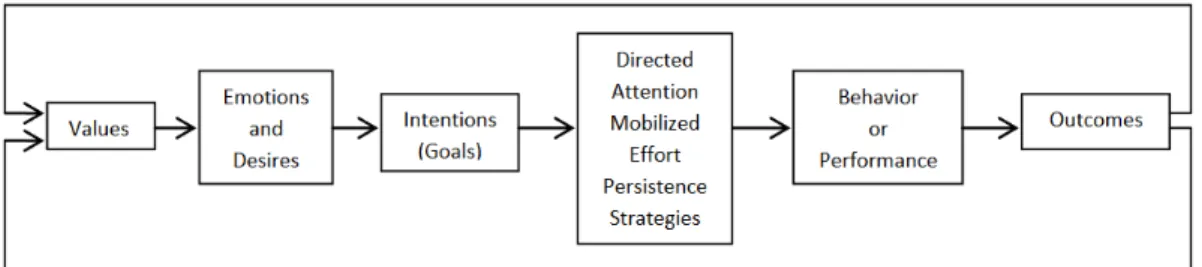
Study population and data collection
The study focused on the use of wearables, sensors, mobile health apps and further the willingness to share health-related data. It can thus be assumed that knowledge of the subject played a role in the study sample. Some of the nine online platforms were disease-specific, so participants were included according to their health status.
Participants had either diabetes type I, type II or sickle cell disease (type SS or S-Beta, type SC or other) or another chronic disease that was not further specified. Information on severity of illness or duration of illness was not collected.
Variables
Variables for descriptive statistics
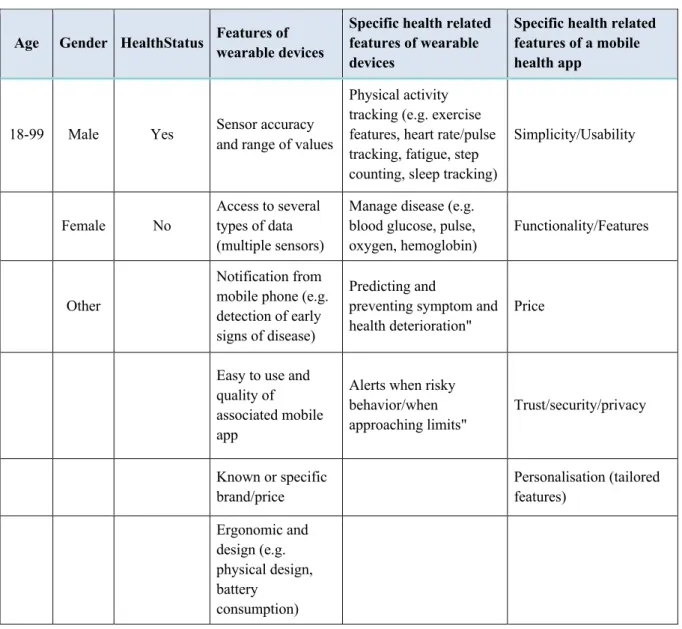
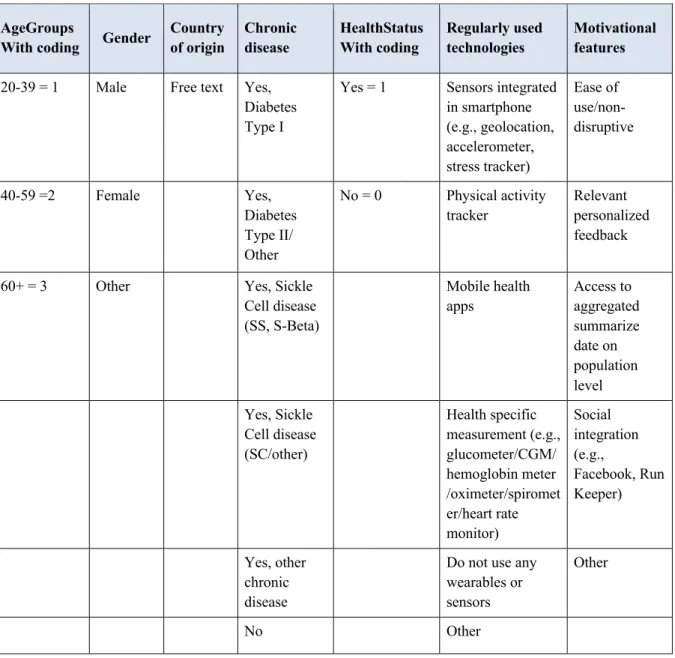
Do not wish to answer” was thus treated as a missing value, resulting in the exclusion of participants from the study sample. Hereby, all persons who answered to have any of the specific diseases mentioned above were categorized as "Yes". For a better overview of the original answer options for the question "do you have a chronic disease?" is also shown in Table 1 and can be found in the "chronic disease" column.
With the study focusing on how both younger and older users adopt wearable devices and mobile health apps, a transformation of the scale variable into subgroups was performed for the descriptive statistics. The frequent use of wearable devices was measured by the question "which of these health tracking technologies do you use regularly?" Participants could select multiple of the given response options presented in Table 1.
Variables for binary logistic regression
Each trait thus represented a dependent variable which was entered into a binary logistic regression model, resulting in 15 variables. Only the Likert scale rating values 1= not at all important and 4= very important were predetermined by the research team. To increase statistical power, all 15 Likert scale variables were recoded and dichotomized with 0 = not important and 1 = important.
The first category “not significant” includes all values of 1 and 2, “significant” includes all values of 3 and 4. Similar to the descriptive statistics section, the specific phrases of the response options appear in Table 2.
Statistical analysis
Descriptive statistics
Binary logistic regression
A summary of wearable and mobile health device usage in total (number and percentage) by age group and health status is provided. The main purpose of the analysis was to determine whether the health status of the participants, as well as age and gender influence the adoption of these mobile health applications and wearable devices. Each characteristic dependent variable was entered into a binary logistic regression model, while first adjusting for health status with a chronic disease as the reference category.
Each independent variable was added once at a time except for health status to assess its effect on the estimate and to prevent overfitting. To ensure that this transformation did not significantly change the final results of the analysis, a sensitivity analysis was performed.
Handling of missing values
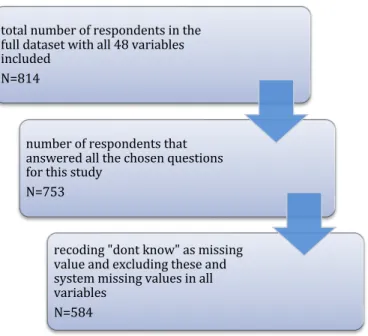
In all 15 models, the p value was above the 0.05 significance level, indicating that our observed event rates matched the expected event rates within our model population. The sensitivity analysis aimed to assess the impact of different values on the results of the study. Further participants with missing values on questions about the importance of specific features or their use were excluded.
To increase statistical power, the response option was coded as "missing value" and excluded.
Ethical perspective and data storage
The original questionnaire and data set were securely stored in a password-protected folder on the computer, and two-step authentication was required for access. In addition, in March 2023 the original dataset was published on Dataverse.no and is accessible for replication research via the following link:.
Descriptive statistics
Demographics
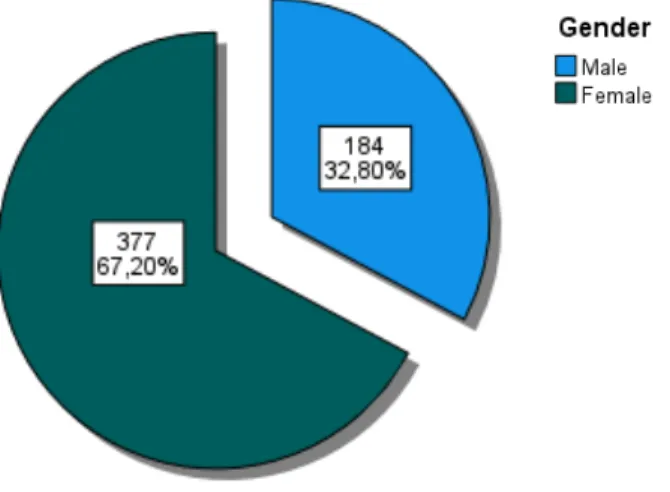
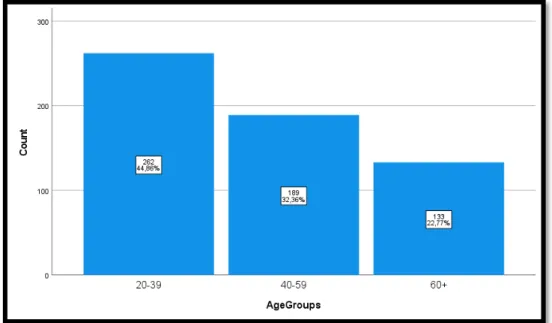
As shown in Figure 7, the distribution of healthy and people with chronic disease was similar within the three age groups. The majority thus represented healthy people in each age group compared to people with chronic disease. An interesting aspect that could be seen here was that more younger people reported having a chronic disease than middle-aged or older people did.
As visualized in figure 8, most participants were from the USA, Switzerland, Norway, the UK, Canada, France and Germany.
Regular use of wearable devices
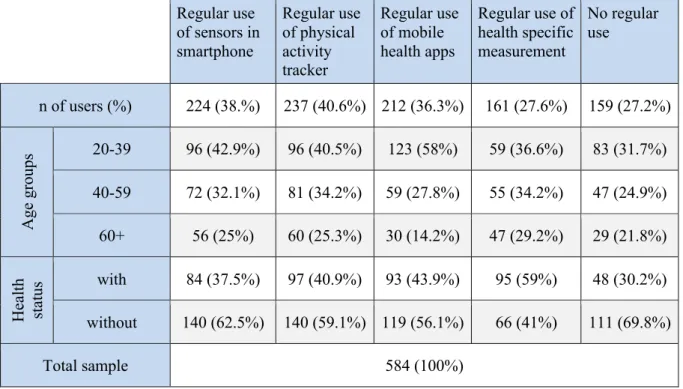
In Figure 9 it can be seen that for all four wearable device options, a minority of the total study sample reported using them.
Most motivating features for a prolonged use
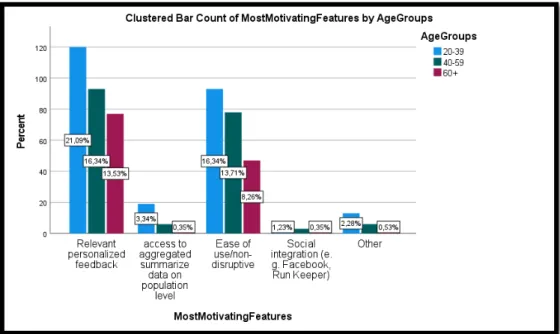
Comparing these characteristics between the groups of healthy participants and people with chronic diseases, the same pattern of choice could be seen (Figure 11). In the group of healthy people, 34.3% chose relevant personal feedback and 21.4% the ease of use. In comparison, about 16.7% of participants with chronic diseases chose the same features as the most important for a longer use of the devices.
Binary logistic regression
Wearable devices
The importance of access to different types of data, ease of use and the quality of the app, as well as a well-known or specific brand or price, did not show decisive associations in our sample.
Specific health related features
A similar positive association between chronic disease and the importance of the outcome variable could be seen for warnings of risky behavior (OR 1.32, 95% CI.
Mobile health apps
The results of the sensitivity analysis showed no significant difference compared to the binary logistic regression performed with the dichotomized variables.
Summary of main findings
Within the category of specific health-related features for wearables, the analysis revealed the following: Individuals with a chronic disease tend to perceive a lower importance of tracking their physical activity than healthy people. As expected, the results for the ability to manage an illness with a wearable device showed that individuals with a chronic illness are more likely to prioritize and recognize the importance of effectively managing their condition. However, the results meant that there was insufficient evidence to conclude that having a chronic illness significantly affects the importance placed on this feature.
Within the category of features for mobile health apps, the logistic regression analysis revealed that people with a chronic disease tend to place less importance on trust, security and privacy issues than healthy people. To summarize, this study was able to identify important motivational drivers for both individuals with and without chronic disease that may prolong the use and adaptation of mHealth wearables and applications.
Reflection on findings
Furthermore, the importance of closely matched and personal characteristics can be observed in our regression analysis. Despite the fact that some of our findings showed inconclusive results, a consistent pattern could be demonstrated.
Methodological considerations
Strengths and limitations
Therefore, important areas of the broad topic of mobile health may not have been covered in this study (Dewaele, 2018, p.270). Specifically, binary logistic regression analysis was chosen due to the dichotomization of the Likert scale variables. This represents a limitation due to the simplification of the data and a reduction of information (Norman, 2010, pp. 627-628).
This selection bias may affect the generalizability of the findings to the broader elderly population (Mayeda, et al., 2020). A replication of the study in a different setting or sample may provide further evidence on the generalizability of the findings.
Future implications
Additionally, a further focus was placed on examining the impact of user demographics (age and gender) and health status on their adoption of mobile health apps and wearables. However, the findings from this study make a valuable contribution to the body of existing knowledge in the field of mobile health. Mobile health intervention for youth with sickle cell disease: Impact on adherence, disease knowledge, and quality of life.
Valuable features in mobile health apps for patients and consumers: An analysis of app content and user evaluations. Drivers of mHealth adoption and use from a patient perspective: research and development of a quantitative model.