Turning the crisis into an opportunity to accelerate towards more sustainable, resilient and human-centric urban mobility systems
4th edition, July 2020
The Future of Mobility post-COVID
Future of mobility post-COVID future lab ®
#BetterMobility
Foreword 5
Executive summary 6
1. Setting the scene 9
2. Mobility patterns in the post-COVID world 11 3. Opportunities to shape more sustainable, resilient and human-centric mobility systems 16 4. How MaaS and a Unified Mobility Management Model could contribute in the post-COVID world 25
5. Opportunities to evolve offerings and operating models for increased resilience 29
6. How to move forward 35
Arthur D. Little’s Future of Mobility lab 37
References 39
Content
3
Authors
Rick Eagar
Partner, Technology & Innovation Arthur D. Little, London
Jérôme Carlier
Manager, Travel & Transportation, Arthur D. Little, Brussels
[email protected] Guillaume Rominger
Manager, Travel & Transportation Arthur D. Little, Brussels [email protected] François-Joseph Van Audenhove Partner Travel & Transportation and Global Head of Future of Mobility lab Arthur D. Little, Brussels
Emmanuel Dommergues Transport Authority Manager UITP
[email protected] Jérôme Pourbaix
Senior Director, Global Growth UITP
Contributors
Tom Teixiera Partner, Risk
Arthur D. Little, London [email protected] Petter Kilefors
Partner, Travel & Transportation Arthur D. Little, Stockholm [email protected]
Rodolfo Guzman
Managing Partner, Strategy & Organization Arthur D. Little, Americas
Karim Taga
Partner, Telecom & Media Arthur D. Little, Vienna [email protected]
Akitake Fujita
Principal, Travel & Transportation Arthur D. Little, South-East Asia [email protected]
Mickael Tauvel
Principal, Travel & Transportation Arthur D. Little, Paris
[email protected] Sean McDevitt
Partner, Strategy & Organization Arthur D. Little, Boston [email protected]
Ralf Baron
Managing Partner, Travel & Transportation Arthur D. Little, Frankfurt
Wai-duen Lee
Manager, Travel & Transportation Arthur D. Little, Hong Kong [email protected]
Morsi Berguiga
Associate Director, Travel & Transportation Arthur D. Little, Dubai
4
The authors would like to extend their sincere gratitude to the following organizations that participated in the study through interactive workshop sessions conducted between May and July 2020.
We would particularly like to extend our acknowledgments to the following individuals for participating in those sessions and for sharing their thoughts and insights (in alphabetical order): Luis Alegra (ATM Barcelona), Juan Corro Beseler (EMT), Ivo Cre (Polis), Marc Chatelain (tpg), Philippe Crist (ITF), Marc Defalque (tpg), Thomas Deloison (wbcsd), Brieuc de Meeus (STIB/MIVB), Marie- Claude Dupuis (RATP Group), Jean-Rodolphe Dussart (Brussels Region), Tomas-Andres Elejalde Escobar (Metro de Medellin), Rolf Erfurt (BVG), Emmanuel Fankhauser (tpg), Mari Flink (HSL), Thomas Geier (EMTA), Jean Ghedira (Keolis Group), Laura Delgado Hernandez (CRTM), Daniel Hesse (BVG), David Holzer (COVID-19 shared mobility task force, former Share-Now), Pedro Homem de Gouveia (Polis), Fernando Isaza (Transmetro), Christophe Jemelin (tl), Michel Joye (tl), Piia Karjalainen (Maas Alliance), Bill Knapp (Uber/Jump), Felix Kwok Wah (MTR), Adi Lau (MTR), Marie-Claude Léonard (STM), Halli Liao Mingyu (Shenzhen Bus Group), Juan- David Correa Lopez (Metro de Medellin), Andres-Fernandez Lopez (Metro de Medellin), Lina Lim (LTA), Wendy Lim (LTA), Giuseppe Luciano (tl), Joe Ma (Shenzhen Bus Group), Lay Hoon Mah (LTA), Miriam Manrique (ATM Barcelona), Maryorie Mantilla (Transmetro), Marta Marazzi (ACEA), Paolo Marchetti (ATM Milano), Guillermo Bravo Marin (Transmetro), Fuensanta Martinez Sans (ACEA), Javier Morales Cobo (FIA), Luis-Miguel Rafael Orihuela Navarro (EMT), Hui Guan Ong (LTA), Tom Page (TfL), Martinez Palancia (CRTM), Mario Peloquin (MTA), Sarita Perez Heneo (Metro de Medellin), Sandra Phillips (movmi & COVID-19 shared mobility task force), André Porlier (STM), Alberto Alonso Poza (EMT), Kendra Puah (LTA), Sophie Rebello (STM), Alvaro Sanchez Rosero (Transmetro), Porie Saikia-Eapen (MTA), Segura Santiago (Metro de Medellin), Gabriel Scheer (COVID-19 shared mobility task force, former Lime), Chris Snyder (Via/ViaVan), Günter Steinbauer (Wiener Linien), Paul Steckler (Wiener Linien), Inravi Thiounn (IdFM), Luc Tremblay (STM), Karen Vancluysen (Polis), Sofia Zaramara Valenzuela (Transmilenio), Ruud van der Ploeg (EMTA), Carolina Leyva Villegas (Metro de Medellin), Thierry Wagenknecht (tpg), Melvin Wah (LTA), Patrick Warren (MTA), Sammy Kwan Wai Wong (MTR), Jeremy Yap (LTA).
Acknowledgements
1
Figure 1: Overview of organizations that were consulted for this study
Source: Arthur D. Little
Mobility solution providers Professional
bodies
Government
& transport authorities
5
Foreword
As we write this report in July 2020, large parts of the world are emerging from lockdown and slowly restarting the economy. City centers which have been eerily deserted are starting to show signs of life, but even with offices, restaurants and shops reopening, it is obvious that things are far from being “back to normal”. How long the recovery will take, what the new normal will look like, and what this means for our mobility systems remains unclear. However, governments, transport authorities and mobility providers still need to prepare now for this uncertain future. With this in mind, Arthur D. Little, together with our long-term partner, UITP – the International Association of Public Transport – has conducted a study engaging with over 70 executives from 30 organizations (transport authorities, mobility solutions providers - public transport operators and “new mobility”
solutions providers - and professional bodies) across the world to understand better how mobility could evolve in the post-COVID world, and in particular, to identify new opportunities that are arising from the disruption caused by the crisis, despite its terrible impact on so many people.
This special Future of Mobility report is the fourth in a series: the first global Future of Urban Mobility study, published in 2011, highlighted the mobility challenges cities faced on a worldwide basis and saw the release of the first edition of Arthur D. Little’s Urban Mobility Index, which
assessed mobility maturity and performance of mobility systems worldwide. The second edition of the study, published in 2014, threw further light on what was holding cities back and identified three strategic paths for cities to pursue, as well as 25 strategic imperatives to consider when defining sustainable urban mobility policies. The third edition, published in 2018, examined societal and technology trends, as well as new mobility solutions, reflected on their likely impact on future mobility ecosystems and provided 12 strategic imperatives for mobility solution providers to consider when defining their visions and strategies to remain competitive in the short term and relevant in the long term.
In this fourth report we assess the likely impact of COVID-19 on future mobility patterns and provide a valuable summary of more than 100 actions that transport authorities and mobility solutions providers are taking, or planning to take, in response to the crisis. We also identified six
“game changers” that we believe are critical for mobility system players to make the most of what we believe is a unique window of opportunity to move towards more sustainable, resilient and human-centric mobility systems. We hope you enjoy reading the report, and that it will be informative for your further mobility endeavors.
Sincerely
Francois-Joseph van Audenhove Partner, Arthur D. Little
Global Head Future of Mobility lab
6
Executive summary
It is clear to all that mobility systems have been drastically affected by the COVID-19 pandemic. As a result of lockdowns, social distancing and hygiene requirements, demand for personal mobility has plummeted, while operational complexity has increased. At the same time, demand for e-commerce and home delivery has exploded. As we write, many cities are gradually reopening after lockdown, but the duration and trajectory of the recovery is still uncertain. As well as a major economic downturn, most observers agree that at least some of the changes in behaviors we have seen during the crisis will endure in the medium- to long-term. The post-COVID world is unlikely to look exactly the same.
Organizations within the mobility system need to develop strategies that will help to shape the future, provide options to respond to different outcomes and offer insurances in case of unforeseen setbacks. To do this, they need to answer some key questions: what are the likely impacts of COVID-19 on mobility patterns in the medium- to long-term? What should be the most appropriate strategic responses for mobility policy makers and service providers in the post-COVID world? In particular, what opportunities are there to leverage the disruption caused by COVID-19 to make a step change towards the goal of more sustainable, resilient and human-centric mobility systems?
To shed some light on these questions, Arthur D. Little, in collaboration with the UITP, initiated the “Future of Mobility post- COVID” study. From May to July 2020, we engaged with over 70 leaders and top executives from over 30 organizations across the world, covering transport authorities, mass transit operators,
“new mobility” solutions providers and professional bodies, to exchange views on the impact of the crisis, actual and planned responses, and insights on the longer-term future. We are very grateful for their excellent contributions. This report provides the results of the study.
Mobility patterns in the post-COVID world
In order to establish a view on how the crisis will affect future mobility patterns and behaviors, we assessed its impact on existing key mobility trends. We identified 12 trends that would be affected across three categories – global, behavioral and technology/market:
n Global: Passenger demand growth; socio-economic inequality; e-commerce; city topology transformation.
n Behavioral: Working from home/flexible working; travel- safety consciousness; healthier mobility lifestyle; re-spacing and retiming of trip patterns.
n Technology/market: Digitalization of offerings; acceptance of new forms of mobility as part of the system; market consolidation of private mobility players; intelligent transport systems.
The striking result is that with the exception of passenger demand growth (measured in passenger-km) which is expected to slightly decelerate in the coming years, all the other trends will be likely to be accelerated by the crisis, which, in itself, opens up opportunities to drive change, provided that policy makers and public transport operators and “new mobility”
MSPs are able to seize the opportunity. Our study respondents believed that, while it was important not to be caught up in the hype and fear surrounding post-COVID predictions, at the same time it should not be assumed that impacts would be limited.
Opportunities to shape more sustainable, resilient and human-centric urban mobility systems
Diseases shape cities. While the crisis has had, and will continue to have, tragic consequences for many people, it has also led to new conditions which can be leveraged to drive innovation towards more sustainable, resilient and human-centric urban mobility systems. COVID-19 was, for everyone, a “life-changing moment”, and it is easier to change behaviors during such moments; city centers with less car traffic can be more easily used as “sandboxes” for innovation; there is increased public awareness of environmental and health benefits; and rapid actions taken during the crisis by authorities and operators have demonstrated the “art of the possible” in terms of rapid and agile decision-making.
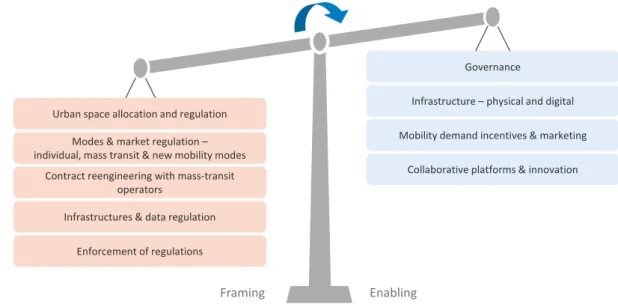
Among the key players that can have the greatest impact are the city governments and transport authorities. For those authorities that are committed to effecting significant change, two broad types of action can be undertaken: Framing (regulating the mobility system and its components) and Enabling (enabling other mobility system actors). Many of the authorities we engaged with in this study have already been taking new framing and enabling actions during the crisis. We have included in the main report some 40 examples of these actions which we believe provide a valuable overview, for example:
7 n Framing: Urban space reallocation; transversal mobility
mode planning; “new mobility” reregulation; contract reengineering with private mass transport providers; parking and curb management; new data regulation; and new enforcement measures.
n Enabling: New governance arrangements for better collaboration across the system; reassessment of investments in mobility infrastructure (e.g., favoring
reversible, lower-cost, healthier mobility modes); accelerated investment in digital infrastructure for Mobility-as-a-Service (MaaS); new mobility demand management measures (e.g., promoting e-bikes/scooters, shared mobility, peak flattening);
and collaborative innovation platforms.
Not all authorities are equal in their ability and willingness to shape a change of paradigm in the aftermath of the crisis. We found that a minority were “Non-believers” not recognizing any urgency to radically rethink the system, a few more authorities were “Progressives” already committed to the need for change, and the remaining 50 percent were “Stuck in the middle”, recognizing the need but struggling to make it happen. Three key obstacles were identified: lack of proven ability to be visionary;
unclear accountabilities between government and the transport authority; and lack of personal leadership. While it is evident that size and available resources limit the type of actions that can be undertaken, ultimately this is not the determining factor and should not be used as an excuse for lack of action. There is a shared fear that unless changes are made, the majority of authorities, maybe as many as two-thirds, may not be in a position to do what is necessary to drive the required change.
Overall, we identified three game changers for city governments and authorities to frame and enable mobility systems for the post-COVID world:
n Game changer #1 Think and act at system level: Develop a unified long-term mobility vision; implement system-level regulation; adopt system-level execution planning; and revise the mobility-funding equation.
n Game changer #2 Foster innovation through public- private collaborations on innovative technology and business model development: Collaborate on technology development and implementation; collaborate on innovative business models; and promote innovation schemes, competitions and projects.
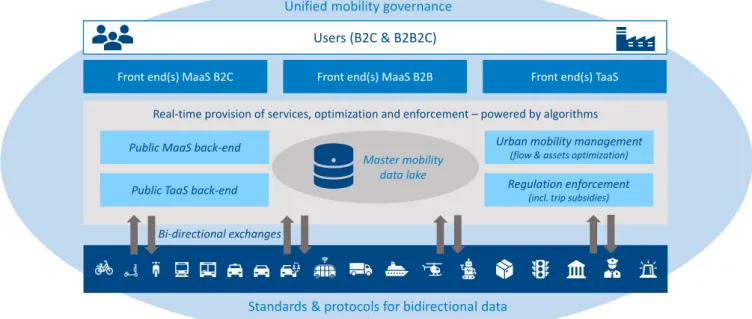
n Game changer #3 Set up a Unified Mobility Management Model, enabling real-time optimization of mobility flows and assets at city or national level, including: a unified long-term mobility vision; a master mobility data lake;
standards and protocols for data collection and bidirectional data exchange; a public authority back-end powered by algorithms; a multi-actor governance approach; and a Unified
Mobility Management Model beyond MaaS to enable real- time optimization of flows and assets.
How MaaS and a Unified Mobility Management Model could contribute in the post-COVID world The concept of MaaS has been subject to hype over recent years. In the short term, the COVID-19 crisis is likely to have a negative impact on the scalability of MaaS development, as the MaaS business model largely revolves around trips performed with mass transit and shared mobility modes which have suffered from collapsing demand. In the medium term, MaaS can contribute to increased system resilience through providing more choice of mobility options and ease of use. Trust can also be rebuilt by providing real-time multimodal information.
However, the current low level of deployment and adoption of MaaS in cities worldwide heavily limits possible impact in the medium term. In the longer term, MaaS certainly has the potential to positively influence mobility patterns and behaviors in a way that will align much better with the uncertain post- COVID environment. The development of MaaS business (B2B) offerings could be an accelerator for further penetration, as the openness of companies to adopt flexible working hours and engage with transit operators has been increased as a result of COVID-19.
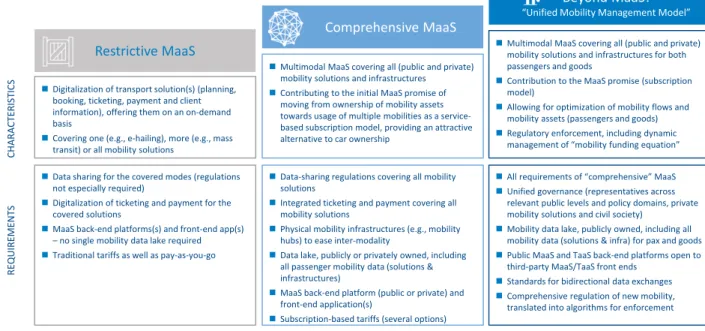
Data is the key for a unified management model to enable MaaS. In the main report (Chapter 4), we have set out the components of a robust, secure and transparent data infrastructure and Unified Mobility Management Model that would be required to handle in real-time all mobility-related data, whether generated by moving or fixed parts of the mobility system, privately- or publicly owned/operated, and shared or unshared. The model needs to have in place standards and protocols to enable data exchange, a middle layer to ensure real- time provision of services and management with empowerment of all actors, and the MaaS/TaaS1 front ends to orchestrate different mobility services to deliver a seamless experience to users. We believe that this Unified Mobility Management Model, although challenging to achieve, promises to solve most of the mobility issues we face in the post-COVID world.
Opportunities to evolve offerings and operating models for increased resilience
Mobility solution providers have faced collapsing demand with increased operating costs during the crisis. Looking forward, profitability will continue to be challenged by reduced patronage affecting both farebox revenues and ancillary revenues from advertising, retail and property development. As well as seeking essential short-term cost reductions and improvements to staff and asset productivity, mobility solutions providers now need to consider more pivotal and fundamental adaptations that can 1 Referring to Transport-as-a-Service applicable to goods mobility
8
be made to their offerings and operating models. Adaptation of commercial offerings by PTOs and MSPs during and in the aftermath of the crisis is, in general, driven by two objectives:
n Improving the overall customer experience to support regaining trust, and to drive customer stickiness, preference and loyalty.
n Improving the resilience of the offering in the context of possible rapid fluctuations in demand in the future, in case of future crises.
In the main report we have provided some 70 examples of either new or accelerated actions being taken by PTOs and MSPs in the context of the crisis, aimed at these two objectives.
These include, for example:
n Customer experience: Flexibilization and adaptation of offers; on-demand services to replace fixed routes;
acceleration of MaaS, new business (B2B) offerings;
incentivization of multimodal trips benefiting the overall system, promotions and incentives to rebuild patronage;
acceleration of digitalization; new prebooking processes;
better data analytics and predictive capabilities.
n Operational resilience: New agile crisis management processes; new technologies for contactless accessibility, passenger identification and tracing; flexibilization of staff schedules and tasks; adaptation of procurement and spare- part management approaches; new cleaning and sanitation approaches; asset repurposing; adaptation of capital investment approaches.
Overall, we identified three game changers for operators to rebuild customer relevance and trust and improve operational resilience:
n Game changer #4 Build intimacy and proactively engage with clients: Build better understanding of specific clients’
(B2C) needs; improve passenger information (availability, relevance, reliability, timeliness, personalization; proactively engage with companies and schools to influence mobility patterns, complementing B2C approaches by business-to- business-to-clients approaches (B2B2C).
n Game changer #5 Accelerate digitalization of both offerings and operations for preference and resilience:
Digitalization of ticketing and payment (including tariff integration) and passenger information; deployment of MaaS (B2C and B2B) front-end application(s) allowing users to conveniently plan their multi-modal journeys, considering their preferences as well as prevailing circumstances; further digitalization of operations.
n Game changer #6 Evolution of established crisis management approaches to better anticipate risks and improve resilience of operations: Develop forward-looking
risk management approaches based on artificial intelligence and machine learning methods and supporting technologies;
develop recovery scenario planning and business continuity plans; set up crisis management and rapid-response schemes for increased agility and flexibility in planning and operation.
How to move forward
The COVID-19 crisis has been, in many ways, a defining moment for mobility in cities. Amid the damage and disruption, it has shown for the first time in practical terms that mobility could actually be very different in the future. It has caused society to reflect and reassess its values and priorities in what could be a quite fundamental way, highlighting the importance of issues such as health, hygiene, the environment and home life, as well as speed, convenience and consumption.
The COVID-19 crisis therefore offers a unique window of opportunity for authorities and operators to significantly reshape mobility systems. They can do this by taking “no regret” actions to address established trends, which will deliver major benefits even if the recovery is fast and life does return to something like the pre-COVID world. This is infinitely preferable to overreacting and taking wrong decisions “in a moment of fear”, or conversely, doing as little as possible and gambling that the world will go back to the way it was before.
We believe that the six game changers we have outlined in this report will help governments, authorities and public transport operators, and “new” mobility solutions providers to shape the post-COVID future and provide the necessary strategic options and insurances to navigate the uncertainties.
Changing the basic paradigm of mobility systems is hugely challenging, and up to now, most cities and countries have struggled to make the sort of fundamental changes needed to move towards sustainable, resilient and human-centric urban mobility systems. Despite, or even because of, the economic stress that we will see over the coming years, now could be the time for stakeholders to act together to make it happen.
Transport authorities have a critical role to play to accelerate change by “framing” and “enabling” the mobility system. PTOs and MSPs also have an important role to play in reinventing their offerings and innovating to increase their relevance and resilience. Mobility is today an interesting playing field for all players in the mobility value chain, including Car OEMs, advance digital solutions suppliers and investors, with strong value creation potential. Achieving success will require vision, creativity, courage and entrepreneurship – but now could be our best opportunity for decades.
9
1. Setting the scene
It is clear to all that mobility systems have been drastically affected by the COVID-19 pandemic. As a result of lockdowns, social distancing and hygiene requirements, demand for personal mobility has plummeted while operational complexity has increased. At the same time, demand for e-commerce and home delivery has exploded:
n Plummeting demand: As shown in Figure 2, there were decreases in overall mobility demand of up to 90 percent during lockdown, with decreases of 40-70 percent
continuing during the recovery period (May-June 2020). This has been accompanied by an increasing share of private mobility (cycling, walking, cars) as people seek to maintain social distance during journeys.
n Loss of revenues and increased operating expenditure for mass transit: Apart from lower passenger demand, vehicle capacities have also been reduced, sometimes up to a factor of ~ 4 to enable social distancing during the initial lockdown, and lowered occupation has led to a major reduction in farebox revenues. At the same time operating expenditures have increased due to additional health and hygiene measures and to enable continued operations and services while respecting social distancing.
n Service suspension for mobility solution providers (MSPs): Most shared and micro-mobility solutions providers have had to suspend services except for some essential passengers, such as healthcare workers. Some have formed
new partnerships for transport of goods such as groceries, pharmacies and restaurants. Some MSPs have undergone massive cost-cutting (for example, in the US, Bird laid off 30 percent of its worldwide staff) and market consolidation is increasing (for example, the new round of funding of Lime led by Uber, with the acquisition by Lime of Uber’s bike and scooter business, Jump).
n Boom of e-commerce and home delivery: The shift towards e-commerce has been drastic. For example, there has been an increase of up to 35 percent in e-commerce activity in the US, with Amazon’s valuation increasing by 40 percent since the beginning of the year. Last-mile delivery activity has also boomed, with home delivery rates more than doubling in some countries.
No one can predict with any certainty the duration of the economic recovery, or whether it will be V, U, W or L-shaped.
However, most observers expect a “new normal” after the recovery phase which will not be the same as the pre-COVID world. While the full extent of the change may be uncertain, all mobility players need to prepare for the post-COVID world by taking the most appropriate strategic and operational options and insurances as mitigation if unforeseen scenarios unfold.
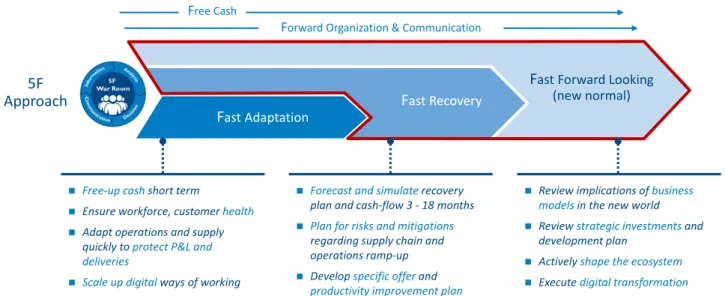
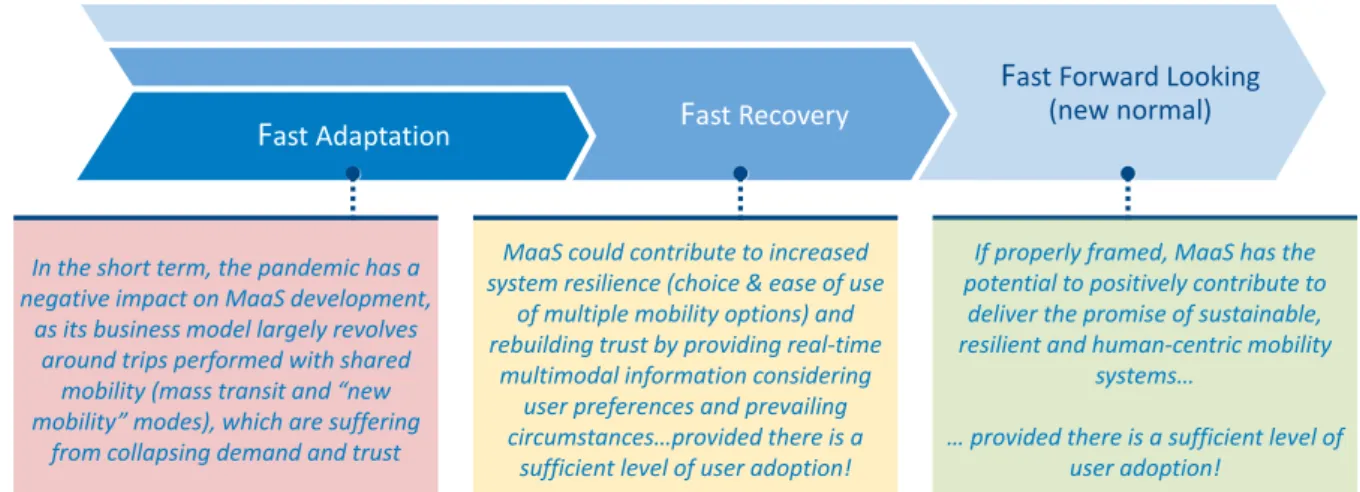
This means proactively developing longer-term, forward-looking strategies, as well as the immediate priorities of crisis response and recovery. We summarize this as the “5F approach2” (Figure 3):
2
Figure 2: Reduced mobility demand by transport mode and by country during the Covid19 crisis
Source: Apple Maps mobility trends report
0 20 40 60 80 100 120 140 160
Germany
April January
France
February March May
Italy Japan
United States Apple Maps movement requests by transport mode
Example of United States, 13/01/2020 - 04/05/2020, basis 100 Apple Maps movement requests for public transport Selected countries, 13/01/2020 - 04/05/2020, basis 100
0 20 40 60 80 100 120
January February March
Driving
April
Walking
May Mass transit
10
Even though the crisis will be painful for many, there are also significant new opportunities emerging from the disruption. Will the mobility industry be able to make the most of the disruption to overcome the barriers, exploit the opportunities and reinvent our mobility systems?
In order to shed some light on this, Arthur D. Little, in
collaboration with the UITP, initiated the “Future of Mobility post- COVID” study, with specific focus on what mobility players need to do to manage the ramp-up and navigate the uncertainties of the post-COVID world. From May to July, we engaged with leaders and top executives from over 30 organizations across the world, covering transport authorities, mass-transit operators, MSPs (providing “new mobility” services), and professional associations, to exchange views on the impact of the crisis, actual and planned responses, and insights on the longer-term future. We are very grateful for their excellent contributions.
The study focused on issues across four areas: demand, supply, operating model and funding (Figure 4):
This report covers the results of the study and is structured into four main chapters:
n What new mobility patterns do we expect to see in the post-COVID world?
n What are the opportunities arising from the crisis to rethink mobility systems to become more sustainable, resilient and human centric?
n How can mobility operators and MSPs adapt their offerings and operating models to meet post-COVID needs and increase resilience?
n What should executives in different parts of the mobility system do now to prepare for the future?
“We are at a time where we can extract most value from international comparisons because of the level of uncertainties in the aftermath of the crisis”
[Transport authority executive]
3
Figure 3: The 5F Approach – Keeping healthy while preparing for recovery and future growth
Source: Arthur D. Little
F
ast AdaptationF
ast RecoveryF
ast Forward Looking (new normal) Free CashForward Organization & Communication
Approach 5F
Free-up cash short term
Ensure workforce, customer health
Adapt operations and supply quickly to protect P&L and deliveries
Scale up digital ways of working
Forecast and simulaterecovery plan and cash-flow 3 - 18 months
Plan for risks and mitigations regarding supply chain and operations ramp-up
Develop specific offer and productivity improvement plan
Review implications of business modelsin the new world
Review strategic investments and development plan
Actively shape the ecosystem
Execute digital transformation
Figure 4: Overview of the focus questions addressed by the study
Legend:
Dark blue: questions at system level
List blue: questions for mass-transit operators/MSPs Source: Arthur D. Little
Mobility demand
How will B2C and B2B mobility behaviors evolve in the new normal?
What will be the implications in terms of trip patterns and what will be the impacts on city topology and modal split?
Mobility supply
Which mobility vision will prevail in the new normal and what are framing and enabling actions?
How to adapt commercial offerings to match (and take advantage of) changing behaviors?
Operating model
Which pivotal adaptations of the operating model will drive up cost flexibility and increase resilience?
Which product, service and process innovations could speed up recovery and increase resilience?
Funding
Which adaptations should be made to the mobility funding equation for the desired mobility vision to materialize and to ensure a sustainable business model for all players?
11 2.1 Indications from initial surveys
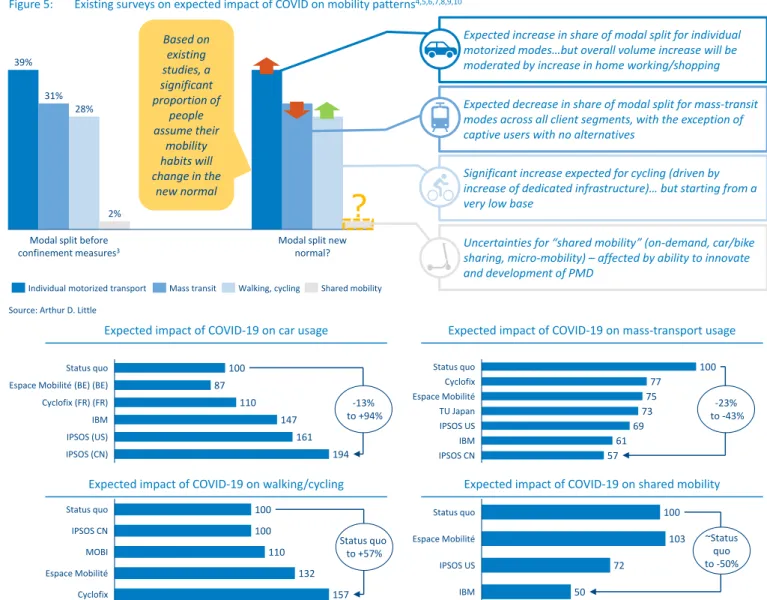
A number of surveys have already been carried out, gauging opinions and expectations of the ways in which mobility patterns will change. In Figure 5 below we have summarized the results of some of these.
Overall, the initial surveys showed that a significant change in mobility patterns and behaviors is expected:
n The share of individual transport (bike, walking, cars) in the modal mix is generally expected to grow in response to social distancing and hygiene concerns, although there is a
large range of expectations on the scale, ranging from zero to more than 50 percent. Biking and walking are encouraged by many public authorities through the creation of new
“green zones”, cycle lanes and pedestrian areas. The “shift to cars” is already a reality in China, with massive traffic jams already observed in several cities.
n Similarly, the share of mass transit in the modal mix is expected to decrease in the short term, although there are many captive users who are not able to switch modes.
2. Mobility patterns in the post-COVID world
5
Figure 5: Existing surveys on expected impact of COVID on mobility patterns4,5,6,7,8,9,10
Source: Arthur D. Little
Modal split new normal?
Modal split before confinement measures3 39%
31% 28%
2%
Individual motorized transport Mass transit Walking, cycling Shared mobility
Based on existing studies, a significant proportion of
people assume their
mobility habits will change in the
new normal
?
Expected increase in share of modal split for individual motorized modes…but overall volume increase will be moderated by increase in home working/shopping
Expected decrease in share of modal split for mass-transit modes across all client segments, with the exception of captive users with no alternatives
Significant increase expected for cycling (driven by increase of dedicated infrastructure)… but starting from a very low base
Uncertainties for “shared mobility” (on-demand, car/bike sharing, micro-mobility) – affected by ability to innovate and development of PMD
6 Source: Arthur D. Little, survey review, Espace Mobilité: N= 3,000; Cyclofix: N= 1,369; IBM= 14,000; IPSOS US= 1,000; IPSOS CN: 1,820; TU Japan: 1,038; MOBI: 614
Expected impact of COVID-19 on car usage
Expected impact of COVID-19 on walking/cycling
Expected impact of COVID-19 on mass-transport usage
Expected impact of COVID-19 on shared mobility 100
87 110
147 161
194 IBM
Status quo Cyclofix (FR) (FR) Espace Mobilité (BE) (BE)
IPSOS (US) IPSOS (CN)
to +94%-13%
100 77
75 73 69 61 57 IPSOS US
IPSOS CN Status quo
TU Japan Cyclofix Espace Mobilité
IBM
to -43%-23%
100 100
110 132
157 MOBI
Status quo
Cyclofix IPSOS CN
Espace Mobilité
Status quo to +57%
100 103 72
50 IPSOS US
Status quo
IBM
Espace Mobilité ~Status
to -50%quo
12
n The impact on shared mobility is less clear from the surveys, although in general a decrease is recognized in the short term due to suspension of services, but with the potential for a quick rebound when restrictions are fully lifted, assuming that customer trust returns.
However, these surveys are only indicative and must be treated with caution. The samples in most cases are limited in size, subject to bias, cover different time horizons and are greatly influenced by the prevailing public sentiment at the times of the surveys concerned, which as we have seen has changed from week to week.
2.2 Analysis of the impact of COVID-19 based on key trends
A more reliable approach to assessing the impact of COVID-19 on long-term mobility patterns is to assess the extent to which known key trends impacting mobility systems are likely to be affected. From our study inputs we have identified 12 impacts of the crisis across trends in three dimensions: Global, Behavioral and Technology/Market (Figure 6):
Impacts of COVID-19 on global trends
There are four global trends affecting mobility demand and supply which are expected to be significantly impacted by the COVID-19 crisis:
n Greater socio-economic inequality affecting mobility demand and mode utilization: A deep economic turndown is now upon us – for example, a GDP decrease of 7.5–9.3 percent is forecast for OECD11 countries in 2020. This will lead to reduced household budgets, including budgets for mobility. Greater unemployment is also certain – for example, an increase from 5.5 percent in March to 8.4
percent in April alone was reported for OECD countries.12 This will lead to reduction in the volume of trips, changes in trip purpose (less home-to-work trips) and respacing of travel (less travel during peak time, more spread during the day). Lower-income individuals and blue-collar workers are more likely to revert to mass transit to get to work, as they have less choice. Economic hardship could therefore drive increasing inequality in mobility systems, with individual travel or non-travel favored by those who can afford it and mass transit for those who cannot.
n Reduced passenger mobility demand growth in cities:
Before COVID-19, urban mobility demand was set to boom, with the urbanization still ongoing and global demand for passenger mobility in urbanized areas set to double by 2050 compared to 2010 (based on passenger km/year).13 Our analysis indicates that COVID-19 will not reverse the growth trend – the populations of cities will continue to grow faster than the overall growth of the global population – however, there is likely to be a deceleration in the rate of growth of passenger mobility demand in the coming years. This could be driven by several factors: economic stress as described above; increased working from home (WFH), especially in cities with large service and administration sectors; enduring reductions in culture and leisure activities; temporary reduction in tourism and business travel; and acceleration of e-commerce and associated reduction in personal travel (see below).
n Acceleration of e-commerce and demand for goods:
Demand for last-mile delivery was already set to triple by 2050,14 but the crisis has further accelerated goods mobility demand, driven by: closures of shops and restaurants and ongoing fear of infection; increased consumer appetite for home delivery acquired during lockdown (for example, there Figure 6: Impact of COVID on affected urban mobility trends
Source: Arthur D. Little Future of Mobility lab and UITP
Global trends Behavioral trends
(influencing demand) Technology/market trends
(influencing supply) Working from home
(white-collars)
E-commerce – Goods mobility demand growth
City topology transformation Socio-economic inequality
Travel safety consciousness
Digitalization of offerings
Market consolidation of private mobility players
Intelligent transport systems Passenger mobility
demand growth
Healthier mobility lifestyle
Evolution of trip patterns (repurpose, retime, respace)
Acceptance of new forms of mobility (part of the system)
13 was an increase of more than 70 percent in France15); and
increased availability of micro-delivery services (for example, ride-hailing solutions were diversified into goods delivery during the crisis).
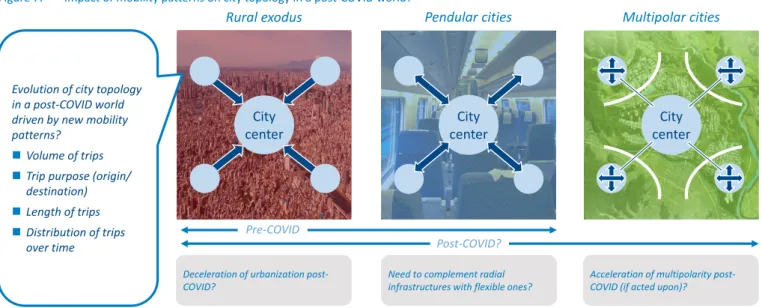
n Acceleration of city topology transformation: Cities have grown over the last century as millions of people have migrated from rural to metropolitan areas in the quest for better safety, jobs, education, and lifestyles (see Figure 7).
However, in recent decades pendularity has been a key trend, whereby dwellers have moved outside cities for reasons of affordability, environment, space and quality of life, and commute frequently for work and leisure, causing congestion at peak times. A more recent trend in certain cities has been multipolarity, where progressively, smaller communities around the original center have started to flourish and become partly self-sustaining reducing the need to commute on a regular basis and thereby releasing the pressure on city centers while making them more pleasant and attractive.16 The COVID-19 crisis will challenge some of the guiding principles of mobility patterns and topology transformation. Multipolar city development, implying shorter travel distances to work and play, could be accelerated in the post-COVID world due to the increasing public interest in a greener environment, influenced by the experience of lockdown. Cities which had been already pushing towards multipolarity pre-COVID are now seeing an opportunity to accelerate the achievement of their plans. Pendular cities, which have often made important investments (or have plans to invest) in heavy radial mobility infrastructure, may need to complement those investments with more flexible ones to accommodate reduced commuting demand and the increased shift towards multipolarity.
Impacts of COVID-19 on behavioral trends
There are four behavioral trends affecting mobility demand which are expected to be significantly impacted by COVID-19:
n Acceleration of working from home (WFH) and flexible working hours: Greater WFH and flexible working was already an increasing trend before the crisis, but despite promotion by governments and authorities, was still limited to an extent: for example, before the crisis only 9 percent of the European workforce “sometimes” worked from home.17 However, the confinement resulting from the crisis may have been long enough to build new habits which will endure.
The generally positive experience of levels of productivity achieved during lockdown, facilitated by digital technology, has greatly increased the willingness of employers to promote WFH and flexible hours. This has also been driven by the wish to avoid staff travel during peak hours, with the attendant increased risk of infection in crowded transport modes. Similarly, staff have realized the advantages of homeworking, such as more time with families and avoidance of the costly and time-consuming commute. This is very likely, therefore, to become a major permanent trend.
However, the limitations should also be recognized: many workers, such as blue-collar workers and essential service providers, are not able to WFH; and continuous WFH for long periods appears to be not sustainable due to adverse effects on health and morale, for example, burnout and feelings of isolation. A mix of WFH and working at the office therefore seems to be the most likely scenario for the longer-term future. For mobility planners, this means an overall reduction in demand (total km traveled) and, importantly, a flattening of the critical morning and evening peaks.
8
Figure 7: Impact of mobility patterns on city topology in a post-COVID world?
Source: Arthur D. Little Future of Mobility lab and UITP
Pendular cities Multipolar cities Rural exodus
Pre-COVID
centerCity centerCity
centerCity
Deceleration of urbanization post-
COVID? Need to complement radial
infrastructures with flexible ones? Acceleration of multipolarity post- COVID (if acted upon)?
Evolution of city topology in a post-COVID world driven by new mobility patterns?
Volume of trips
Trip purpose (origin/
destination)
Length of trips
Distribution of trips
over time Post-COVID?
16 The “15-minute city” introduced by Carlos Moreno (associate professor at the Paris IAE-Pantheon Sorbonne University in France) is an illustration of the multipolar concept, promoting a true shift to a human-centric city design: within 15-minute intervals, each neighborhood should fulfill six basic social functions: living, working, supplying, caring, learning and enjoying
14
n Acceleration of travel safety consciousness (fear of infection): Safety has always been a central issue for mobility systems, but the choice of mobility modes during the crisis has been heavily affected by health and hygiene concerns. In the aftermath of the lockdown, there has been a deficit of trust towards mass transit and shared mobility, driven by the perceived risk of infection from contaminated surfaces and the challenge of maintaining physical distancing. While trust is likely to be regained in the medium term, increased safety consciousness is here to stay, and this requires a step change in levels of cleanliness and sanitation from operators.
“This is a wakeup call towards mass-transit operators to further improve our cleaning process and look for available technology to
mitigate those risks in order to regain trust”
[Mass-transit operator executive]
n Acceleration of adoption of healthier mobility modes:
The lockdown has further highlighted citizens’ increased appetite for healthier lifestyles, including increased interest in active mobility: walking, cycling and other private mobility devices (PMDs) such as privately owned e-scooters. For example, electric bicycle sales roughly doubled (Van Moof recorded increases of 184 percent and Cowboy 230 percent versus the previous year up to April). In the UK, 1.3 million electric bicycles were sold from January to May 2020, compared to only 508,000 cars (some 20 percent of which were electrified). The increase in PMD adoption has been driven by perceived hygiene advantages, reduced safety concerns due to empty streets, and more time for reflection about personal health and physical condition. In some cities, the interest has also been fueled by subsidies given by authorities to individuals (e.g., up to EUR 750 for individuals to purchase electric motorcycles in Madrid). However, favorable weather conditions from March to May have also been a factor in some parts of the world, and the trend may fade during the winter period.
n Evolution of trip patterns (Repurposing, Respacing, Retiming): The global and behavioral trends described above collectively will affect trip patterns. While a slight deceleration of passenger mobility demand in terms of total kilometers traveled is expected in cities, the number of trips per capita is expected to remain stable. However, we expect some Repurposing of trips (fewer trips to workplaces, more for home needs), Respacing (more short, local trips) and Retiming (flattening/staggering of peak hours across all modes). There is uncertainty about how much peak flattening will continue post-lockdown, with some cities seeing continued flattening and others seeing
rapid reformation. Flattening of the peak has huge potential benefits for productivity in cities, including goods as well as people. As we have shown above, an increased share of PMDs and cars at the expense of mass transit is likely in the short term, but this is not expected to last into the medium term. Evolution of the modal split will also vary by city, depending on, for example, the proportion of white-collar versus blue-collar jobs and, in the longer term, the pace at which multipolarization evolves.
Impacts of COVID-19 on technology and market trends n Acceleration of digitalization: The well-established
digitalization trend has been boosted by COVID-19, as businesses have sought to accommodate new ways of communicating, collaborating and operating. Internet traffic increased by up to 30 percent during the crisis.18 Within the mobility ecosystem the crisis is driving public transport operators to accelerate the digitalization of their offerings (e.g., acceleration of the digitalization of the customer interface for ticketing and payment, as well as of their passenger information channels), mainly to benefit the effectiveness of client interaction (i.e., reduction of physical touchpoints reducing the perceived risk of infections) and the personalization of the client information (e.g., tailored messages considering client preferences). Similarly, acceleration of digitalization has also occurred for reasons of operational resilience – for example, flexibilization of planning, automation of cleaning. This will be further explored in Chapter 5.
n Acceptance of new forms of mobility as parts of the system: Actions taken by many private mobility solution providers during the crisis demonstrated the positive contribution they can make to increasing the resilience of our mobility systems. For example, several on-demand and micro-mobility players extended their offerings to healthcare professionals and nonprofit bodies responsible for delivery services, or even offered free rides. Moreover, many MSPs have been establishing new partnerships (e.g., with local restaurants, groceries, pharmacies) to quickly adjust to new demand for services. Historically new forms of mobility did not always benefit from good reputations with mainstream transport authorities, but the crisis has increased public perception of their value and triggered reflection by some transport authorities on further partnership and integration models, whereby some private on-demand, shared or micro- mobility players could be considered, at least in part, integral to the “public mobility system” being delivered under the public service obligation (PSO). This is especially relevant when they can efficiently and effectively complement mass transit, for example in the first and last mile and in less densified areas that do not justify public transport coverage.
15 n Acceleration of market consolidation of private mobility
players: Market consolidation is expected to accelerate, driven by falls in revenue due to the ongoing economic downturn, as well as the repercussions of suspension of activities and collapsing demand during the crisis itself.
Examples during the crisis include Lime’s $170 million funding round, including the acquisition of Uber’s electric bike and scooter operation Jump, Waymo raising $3 billion in venture capital, Didi (the “Uber of China”) raising $500m for autonomous mobility and Intel acquiring Moovit (MaaS solutions) for $900 million. However, higher risk aversion from investors, reflecting the uncertainties in future mobility demand in the aftermath of the crisis, may also drive private MSPs to look for alternative financing models. This may increasingly involve getting closer to city authorities and gaining access to public subsidies in exchange for guaranteed contributions to mobility PSOs (as mentioned above).
n Acceleration of enablers for intelligent transport systems (ITSs): The pandemic accelerated the need for multimodal ITS integration, including – as mentioned above – integrated ticketing, payment and real-time passenger information.
These are critically important to manage safety-related aspects such as physical distancing, contactless transactions and modified timetables. More broadly, data reinforced its status as being the “new oil” during the crisis, and there is now more openness on the part of PTAs and PTOs towards data-sharing policies. (For example, deployment of data sharing is a requirement of the ITS Directive/NAP in Europe and, while several nations are still lagging behind, the COVID-19 crisis was reported by many authorities as accelerating progress). Furthermore, data sharing, integrated ticketing and payment are all important enablers for Mobility- as-a-Service (MaaS) platforms, as will be further explored in Chapter 4.
2.3 Conclusions
The following conclusions may be drawn on mobility patterns in the post-COVID world:
n In the medium- to long-term, the crisis is likely to accelerate a number of pre-existing trends affecting supply, demand and structural change within mobility systems, in addition to short-term deceleration of passenger mobility growth rates.
n The duration and slope of the recovery from the current crisis, and whether it will be followed by subsequent crises, will, of course, strongly influence the scale of the impacts described, as some of the impacts may be seen as precursors which may soften rapidly in the case of fast recovery. It is important not to be caught up in the hype and
fear surrounding post-COVID predictions, but at the same time, it cannot be assumed that impacts will be limited.
n Apart from the extent of the crisis itself, another key driver that will have a major influence on whether mobility systems will see lasting change is the ability of policy makers, as well as (public and private) MSPs, to seize the unique opportunity provided by the crisis to accelerate a mind-set shift in mobility behaviors and a structural shift in the way mobility systems are organized within and around our cities. This will be addressed in the next chapter.
16
3.1 An opportunity to shape the future of mobility in cities…for those that can seize it.
Diseases shape cities. Some step-change developments in urban planning and management, such as the first modern underground sewer system in London, were developed in response to sanitary crises. The aftermath of the COVID-19 crisis provides us with the opportunity to step back and reflect. As a direct result of the lockdown we started witnessing actions by governments all over the world which could indicate the start of a different way to plan and manage cities. But to what extent do we believe this crisis could be a real trigger for lasting change towards more sustainable, resilient and human-centric cities?
And if so, what are the requirements to make it happen?
While the crisis has had, and will continue to have, tragic consequences for many people, one of the upsides is that it provides a unique opportunity for innovation. For example, in terms of mobility systems:
n The crisis was a “life-changing moment” for everyone, and it is easier to change mobility behaviors during such moments.
Increased public acceptance of change lowers the risk for politicians and officials to become innovation leaders rather than laggards.
n With the reduction of mobility demand and the significant reduction of car traffic, city centers have become
“sandboxes” where new measures can be tried out. There is also less risk of immediate controversy if new measures are explored which restrict cars.
n City authorities and private actors can leverage the
momentum from raised public awareness of environmental issues during the lockdown to accelerate the transition to sustainable mobility.
n Responding to the crisis has often required rapid action, circumventing slow urban-planning processes. Now that the “art of the possible” has been demonstrated, there is a good window of opportunity to build on the lessons learned and complement typically long-term urban and infrastructure investments with smart and impactful short- to medium- term investments.
In the previous chapter, we showed that certain mobility trends are being significantly impacted by the crisis, and that the scale of impact will depend greatly on the duration and slope of the recovery. However, we also concluded that major, lasting change towards realization of a more sustainable, resilient and human- centric mobility system will depend a great deal on whether key players seize the opportunity. Among the key players that can
3. Opportunities to shape more sustainable,
resilient and human-centric mobility systems
Figure 8: Framing and enabling actions for sustainable, resilient and human-centric mobility systems
Source: Arthur D. Little Future of Mobility lab and UITP
Framing
Governance
Collaborative platforms & innovation
Enabling
Infrastructure – physical and digital Mobility demand incentives & marketing Urban space allocation and regulation
Contract reengineering with mass-transit operators
Enforcement of regulations Modes & market regulation – individual, mass transit & new mobility modes
Infrastructures & data regulation
17 have the greatest impact are city governments and transport
authorities. For those authorities that are committed to effecting significant change, two broad types of action can be undertaken (see Figure 8):
n Authorities can act on the system by regulating each of its components (Framing). The range of possible actions for regulation and enforcement spans urban space, modes, markets, infrastructure and data.
n Authorities can also enable other system actors to move things forward coherently and effectively (Enabling).
Enabling actions include governance arrangements, investments in vital physical and digital mobility infrastructures, measures to influence behaviors and platforms for collaboration.
Enabling actions are often identified by authorities as being the more challenging, because they often require courage and
willingness to act outside traditional boundaries, sometimes beyond authority remits, and are dependent for their success on effective coordination and collaboration with other actors.
Many of the authorities we engaged with in this study had already been taking new framing and enabling measures during the crisis. In some cases, these relate to acceleration or broadening of existing plans, but in other cases they are new measures, aimed at using the crisis as an opportunity to introduce new innovations and change long-term plans. In the following table we have collated some of these key framing and enabling actions, based on our discussions with authorities and MSPs (public and private). While the list could not be considered exhaustive, we believe it provides a valuable overview of the nature of actions being undertaken to shape the future of mobility systems.
1
Levers Actions
Urban space – Allocation
and regulation Intensification of road repurposing from private mobility and/or parking spaces (or, in some cases, from dedicated bus lanes) to active mobility and PMD (see also Enabling – Infrastructure).
Shift from car-centric street to human centric. Introduction of “slow street”/“safe street” networks that prioritize pedestrians and cyclists and limit individual car access.
Reorganization of urban design to cater better for urban logistics.
Temporary reallocation of streets and parking spaces for other functions, including moving to more dynamic management of the curb (reallocation of space across different times of the day to accommodate, for example, increased delivery needs or leisure activities requiring extended outside seating).
Modes & market
regulation – Transversal Concerted acceleration of the establishment of “intermodal mobility master plans” at national or city level to bridge the gap between urban space allocation and mobility modes, and to structurally improve connection nodes while adjusting operating modalities to the nature of the flows.
Modes & market regulation – Individual motorized mobility
Acceleration of regulation of standards related to polluting cars (SUV, old cars).
Rethinking of road-user charges or introduction of congestion charging to ensure that the road network does not deliver growing congestion due to increased road freight vehicle activity driven by the boost of e-commerce and home delivery.
Such initiatives are particularly relevant to avoid an unwanted shift from public transport to private vehicles. It would provide funding to balance the revenue loss from public transport and contribute to other initiatives in mobility investment.
Accelerated regulation of new mobility solutions. This was best illustrated during the lockdown by New York City, which issued a new state law in April 2020 to legalize the use of e-bikes and e-scooters and will shortly have an accelerated launch of a large bike-sharing scheme.
Modes & market regulation – New mobility
Regulation of new mobility to encourage test & learn approaches, for example:
Regulatory sandbox for shared, on-demand and micro-mobility solutions.
Regulatory sandbox for drone delivery.
Acceleration of regulation towards autonomous mobility.
Provision of targeted subsidies for trips performed by shared or on-demand mobility solutions when those trips are considered valuable to the system, thereby influencing both supply and demand. (The aim of this measure is to signal which trips are valuable to the system, for example, by incentivizing MSPs to increase the
geographical coverage of their offers).
Contract reengineering with private mass-transit operators
Major subsidies granted by governments to offset the negative impacts of the crisis on private mass-transit operators’ revenues, especially those with “net cost contracts” whose margins rely very heavily on passenger fares, or those with “gross cost contracts”, including significant revenue incentive schemes (See also Box below).
Infrastructure regulation – Parking and “curb management”
Flexible time and zone management of on-street parking with measures such as adjusting parking fees during the day, reducing parking spaces, fixing time limits, using real-time information to inform users about congestion, and managing access to restricted areas.
Framing actions
18
Box 1: Urban space – Why does it matter so much post-COVID?
The ongoing tension between automobile-centric versus human-centric cities is a challenge that urbanists have been grappling with for the past 75 years. The current way of allocating urban space has reduced the resilience of cities. Space and time have been, for a long time, the key parameters on which to design and measure the performance of our transport systems: time is valuable to individuals while space is precious to public authorities and society. Collectively for society, space is the scarcest resource and cities realize that they need to allocate it more efficiently. This is even more important in the context of imposition of physical distancing requirements. Despite appearances, street configurations are not set in stone and cities are already taking actions to reallocate space to allow for physically spaced walking and cycling.
The pandemic indirectly led to reassessment of the function of public spaces. It opened the eyes of the public towards an interruption to the status quo and an evolution towards new functions which were not foreseeable in the pre-COVID world, for example, positioning public spaces to fulfill an essential “stay function”, not only a “passage function”.
Building on these experiences, several authorities are now realizing opportunities to undo some of the mistakes of the past in which cars were given priority over human beings, and are now contemplating permanent shifts in mobility infrastructure to facilitate active transportation, multi-modality, and human-centric cities. As well as improving quality of life, such shifts can improve cities’ economic performance.19
Box 2: The implications of contractual design and specification for private mass transit operators
During the pandemic, mass-transit operators suffered from plummeting demand while public service obligations required them to keep services running with increased operational costs due to new hygiene and health measures.
The financial impact for operators has been very much dependent on the nature of their contracts with governments. Operators with “net cost contracts” whose revenues relied heavily on passenger fares (as it is for instance the case for some contracts in the UK and the US), or with “gross cost contracts” with significant incentive schemes (as is the case in Sweden), were severely hit during the crisis. For operators with gross cost contracts paid on a per-kilometer basis regardless of the number of passengers carried, the detrimental impact has been more limited. Revenues of transport authorities were severely affected too, including notably passenger fares (when collected by the authorities), revenue from congestion charging and property taxes. In London for instance, the government agreed an emergency funding package of approximately £1 billion to allow TfL to run public transport safely between May and October 2020, as COVID-19 has had a catastrophic impact on TfL’s finances – as it has everywhere in the UK.
Such public interventions may however not be sustainable in the long term, and moving forward, other levers to drive more flexibility and resilience in transport operators are currently under investigation by several transport authorities – particularly those authorities which will have to launch new tendering procedures in the next few years. Among the levers currently being contemplated are: the introduction of more service flexibility, e.g., allowing flexing up or down of the volume of services or temporary replacement of some routes with on-demand services; the introduction of more dynamic governance mechanisms to improve “real time” decision making; and the inclusion of insurance requirements in the contract to mitigate the financial risk of collapses in demand in the case of crisis. In all cases, these changes reflect the evolution of the relationships between authorities and operators from traditional client-supplier style towards partnership.
2
Levers Actions
Data regulations Development and deployment of data-sharing policies, reflecting the increased importance of data for tracking and passenger information purposes, as well as the integration of ticketing and payment, which constitute key requirements for a MaaS platform. In Europe this includes accelerated deployment of the requirements of the ITS Directive/NAP.
Accelerated evolution in Europe from an "open data" policy for mass-transit data implying full opening of data without conditions, towards a "shared data" policy implying openness of data under conditions of reciprocity and usage.
(See also “Accelerated investment in MaaS by public transport authorities” under Enabling actions).
Enforcement Increased monitoring of the road utilization and operations of new mobility solution providers in order to better control compliance with regulations and allow for enforcement (including penalties) in case of non-compliance.
This can include, for example, operational constraints such as vehicle fleet size, parking requirements, and safety requirements, as well as speed.
19 3
Levers Actions
Governance Rethinking of the governance model towards more integration, efficiency and collaboration across all actors (public and private), not only in planning, but also across execution.
Establishing a unified mobility control center to steer and optimize system flows, supported by an enabling data platform with access rules and arbitration arrangements.
Investments in physical
mobility infrastructure Reassessing investments in mobility infrastructure to:
Focus on those investments which will be a stimulus to re-boost the economy.
Delay or deprioritize certain investments to meet new, reducing public funding constraints.
Focus on reversible projects to avoid investing in high-cost infrastructure that may not be compatible with future needs.
Examples of post-COVID new or accelerated mobility infrastructure investments include the following:
Extensive cycling-network extension to nudge active travel (walking, cycling) and personal mobility devices (PMDs, e.g., e-scooters and other devices).
Introduction of temporary "pop-up lanes" (mostly in Europe), some of which are likely to be perpetuated.
Development of robust infrastructure for pedestrians to improve the walkability of cities (e.g., increasing the size of sidewalks).
Infrastructure for urban logistics (e.g., urban distribution centers – UDCs).
Parking space for micro-mobility (see also Urban space – Allocation and regulation above).
Dedicated bus lanes for public transport (see also Urban space – Allocation and regulation above).
Planned accelerated development of multimodal mobility infrastructure ("mobility points") in city centers, or at the outskirts of cities, to support new commuting patterns with the aim to improve intermodality between mass transit, active modes (bicycle) and new mobility solutions (shared mobility and micro- mobility).
Planned accelerated development of e-mobility charging infrastructure.
Investments in digital
mobility infrastructure Planned accelerated investment in MaaS by PTAs, often in collaboration with PTOs, with increased focus on the "disaggregated open MaaS platform" market model. This model involves the development of a public MaaS back end and data lake open to MaaS third-party operators (public and private) to connect and deploy their front-end MaaS business-to-consumer applications. Special mention can be made to Madrid PTO (EMT), which developed during the crisis a MaaS manifesto, "Alianza por un MaaS sostenible”, to unlock the potential of MaaS by enhancing trust and balance between public and private actors.
Investment in urban logistics digital platforms for essential-goods delivery, for example, by on-demand mobility solutions, delivery scooters or bikes. This includes using volunteers to cater for the needs of the elderly during the crisis, as has been done in Brussels.
Mobility demand management through incentives,
marketing &
communication
Introduction (or enhancement) of mobility demand management measures to positively drive mobility behaviors. Illustrative examples include:
Incentives to encourage adoption of soft mobility modes (e-bikes and e-scooters).
Incentives to encourage adoption of shared mobility.
Discounts on parking for shared cars.
Delivering a public relations push, including communication and narratives, to:
Restore public trust in mass transit, including new safety and health processes and transparency on charges, to avoid the “shift to car”.
Maintain/reinforce a shift towards a sustainable mobility mix (including on-demand, shared, PMD).
Incentivizing business enterprises through tax relief to increasingly favor WFH and arrange employee work hours to support flattening the peaks. Also provide businesses with guidance on how they can support their employees in WFH.
Proactive communication towards schools to trigger adaptation of school schedules (starting and closing times) to flatten the peak