In case of discrepancies between this translation and the original Swedish text, the Swedish text shall prevail in the interpretation of the report. SHK accident investigations aim to establish, as far as possible, both the sequence of events and the causes of events, together with the damage and effects in general. In view of the measures taken by the Swedish Maritime Administration and Terntank Ship Management AB, SHK finds no reason to make any recommendations to them.
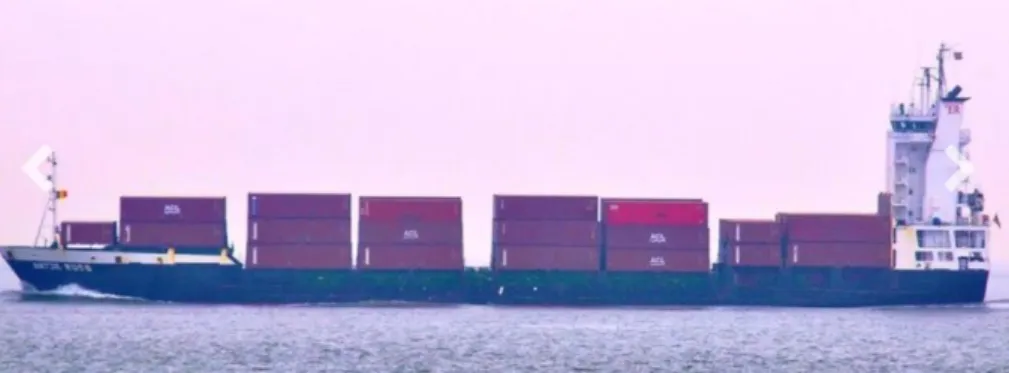
FACTUAL INFORMATION
Sequence of events
- Background
- The pilotage of PHOENIX II
- Following the pilot’s disembarkation
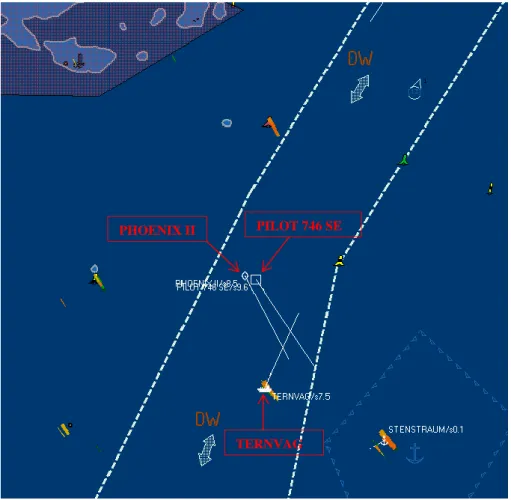
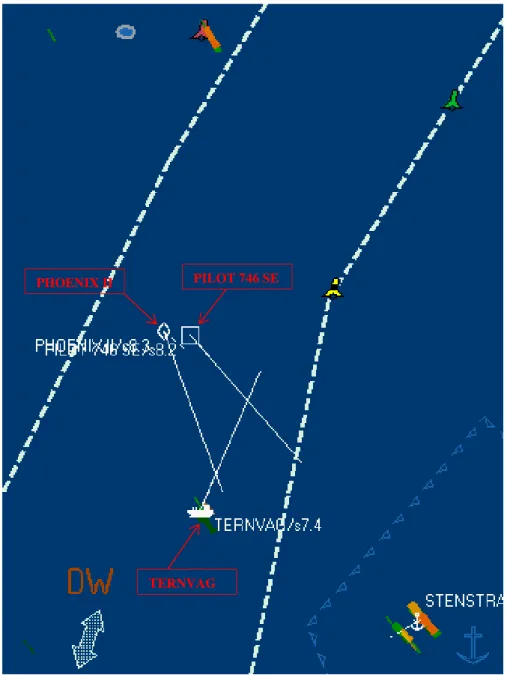
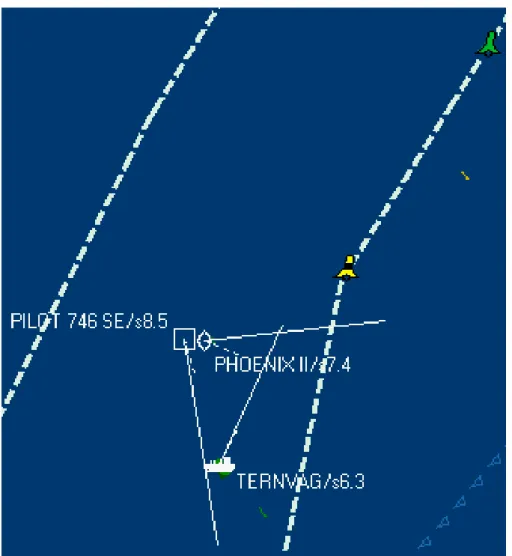
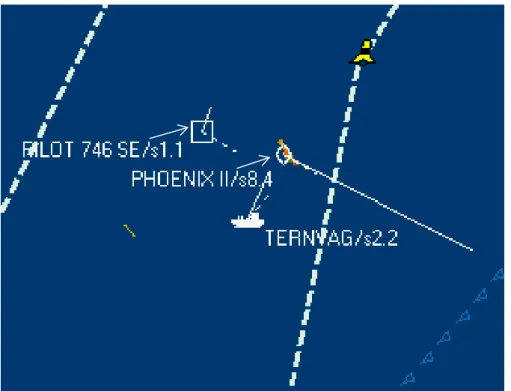
After the master maneuvered the PHOENIX II from the quay, the second officer went on the bridge and the pilot took over the operation of the ship. He saw the PHOENIX II reduce speed and turn to port and then the pilot left the ship. Vessel's positions, headings and speed at 02:12:30 when the pilot calls PHOENIX II from the pilot boat.
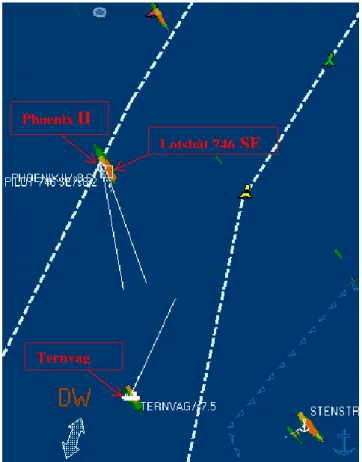
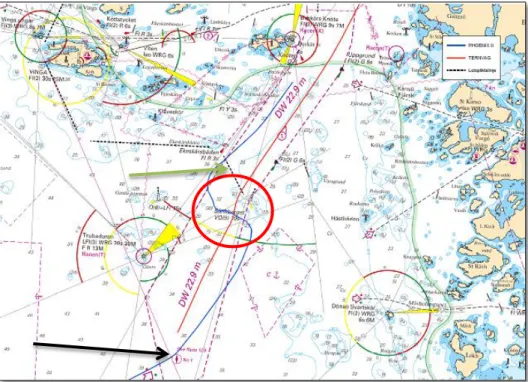
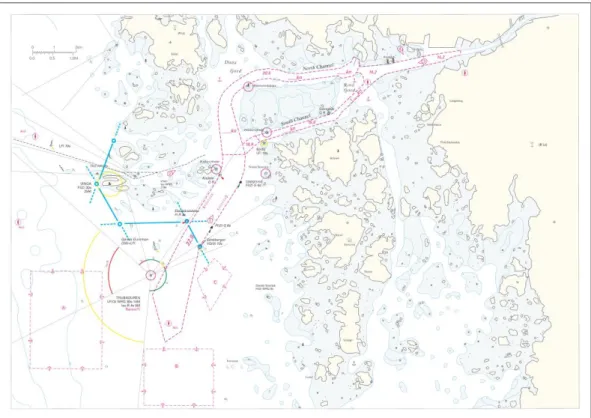
Location of the occurrence
In addition, he felt alone on the bridge and realized that the presence of another officer on the bridge would have been helpful in this critical situation.
PHOENIX II
- General
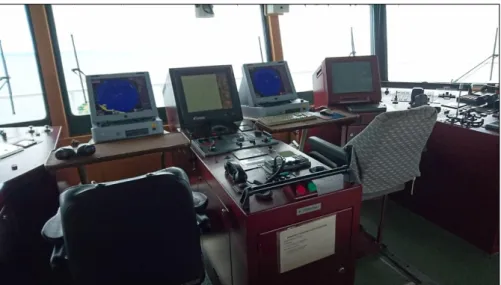
- The bridge
- The crew
- VDR – Voyage data recorder
The wings of the bridge were equipped with appropriate aids for maneuvering the vessel to and from the shore, e.g. However, it was not possible to steer with the autopilot or switch to the autopilot from the bridge wing. Switching from autopilot to manual steering was, as usual, entirely possible from the wings of the bridge.
He served with the same shipping company for 19 years and held a master mariner qualification. With the help of a technician from the manufacturer, SHK was able to remove information from the unit. During the first of the two hours there was a disruptive noise which made a satisfactory analysis of what was said on the bridge impossible.
The quality was also inadequate during the remaining part of the time, with low volume and dissonance. A technician from the manufacturer operates the vessel's S-VDR following the incident and found dissonance in the sound recording on the bridge. The vessel's S-VDR had been in service for nine years and more than 8,000 hours at that point.
The technician was able to determine that the fault was in the S-VDR and not in the microphones.
TERNVAG
- General
- The bridge
- The crew
- VDR – Voyage data recorder
The last annual check took place on April 7, 2016, more than three months prior to the incident. The starboard SLOP tank9 was empty, but previously contained sludge and bilge water. RME has a flash point of 175° and must be protected against heat according to the cargo documents.
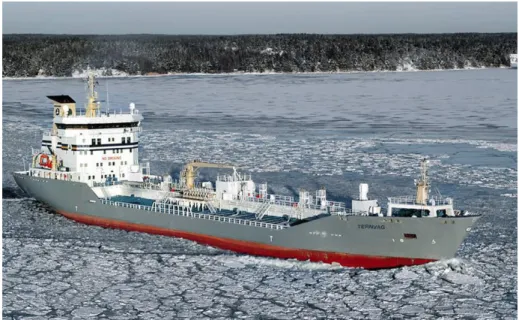
Gas oil has a flash point of more than 60° and should be kept away from heat, sparks, open flames and hot surfaces according to the freight documents. TERNVAG did not have an inert gas system on board and was not required by applicable regulations. In the center, between the two navigation positions, was a pulpit, with good visibility to the front and to the sides.
The center console was equipped with VHF, a control console for the engine and bow thruster, manual steering, skip and automatic steering centered and easily accessible from the sailing positions. The master had worked at sea for more than 40 years, during the last eight years as a master in the same shipping company. He had a master mariner qualification and had served on board TERNVAG for the past six years.
TERNVAG was equipped with a VDR, the main purpose of which is the automatic recording of relevant navigation data for easier inquiries and accident investigations.
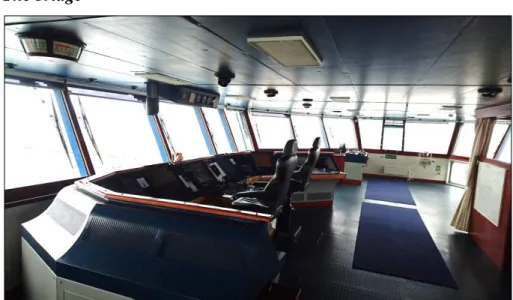
Vessel traffic service (VTS)
- General
- VTS Gothenburg
- The VTS operator
The VTS regulations are mainly aimed at vessels that are users of the VTS service. During the development of the VTS operation, there was a discussion within the Maritime Administration about how to implement an intervention without disrupting operations on board or stealing the attention of the ship's crew unnecessarily. As there is no authority to define in more detail how the Maritime Administration's VTS operations will be carried out, the Transport Agency and the Maritime Administration would like to share responsibility between the authorities as to how the VTS should be regulated.
On the way in, a report must be made when the vessel enters the VTS area, which is defined as 6 M from Vinga. The AIS tracks are recorded together with the radio traffic that takes place in the VTS area. Radio communication within the VTS area must take place in English on VHF channel 1311.
The VTS center in Gothenburg is physically co-located with the port monitoring center (port control) and pilot operators. The VTS operator qualified as a captain-seaman in 2000 and subsequently served as an officer on merchant ships for 11 years. At the time of the incident, he was the VTS operator on duty, together with a pilot operator and a port control operator on duty.
The incident was reported in Sweden Traffic13 with the information that the VTS operator deliberately avoided joining the VHF radio traffic so as not to interrupt the conversation between the pilot and the two vessels in this critical situation.
Pilotage
- General
- The pilot
In the event of bad weather, VTS is provided with additional resources over and above the normal VTS crew in the form of a pilot, which VTS operators consider a positive. He had served as a VTS operator for four years in the Maritime Administration. He realized that a critical situation could arise when PHOENIX II had turned and headed directly for TERNVAG.
In conjunction with this, the pilot called PHOENIX II from the pilot boat, which meant he chose not to join the conversation on VHF. According to article 31 of SJÖFS 2016:3, the master must make it possible for the pilot to board and disembark the vessel at the boarding places indicated in an appendix to the regulations or at a boarding place specifically designated by the Maritime Administration . Thanks to the pilot's knowledge of the fairway and experience in maneuvering many different types of vessels, they contribute to maritime and environmental safety and can maintain accessibility when vessels travel through Swedish inland waters.
Before becoming a pilot, he held positions such as captain and had been at sea for more than fifteen years.
Incident reporting within the Swedish Maritime Administration
Meteorological information
Relevant regulations
- Navigation rules
- Pilot boarding point
- Rules for rigging and manning pilot ladders
- Rules for manning of the bridge etc
- Ship-to-ship communication
- Rules applicable to VDR
- Rules pertaining to inertgas on board tankers
- Rules pertaining to the work environment in Sweden
The measures taken to avoid collision with another vessel must be such as to result in passage at a safe distance. The effect of the action must be carefully monitored until the other ship has completely passed and is clear. . e. This means that an accommodation ladder must be rigged with a freeboard greater than 9 metres.
It is stated that the composition of the bridge guard must always be suitable for the purpose and must be adapted to the prevailing conditions and circumstances. A VDR is to have an interface with which saved information can be downloaded and played on an external computer. The interface must be compatible with an internationally recognized format such as Ethernet, USB, FireWire or similar.
The software must be compatible with an operating system found on computers that can be purchased at a normal retail store. There should be instructions on how to use this software and how to connect a laptop computer to it. If a VDR needs to be replaced, the vessel must be adapted to the new regulations.
This means that functions such as voice recording should be checked during annual testing.
Company organisation and management
- Peter Döhle Group – PHOENIX II
- Terntank – TERNVAG
Additional information
- Risks of fire and explosion in the event of a collision involving
Previous investigations of similar occurrences
The tanker was on its way from Gothenburg and the passenger ship on its way to Gothenburg.
Actions taken
The shipping company has started to carry out risk analysis regarding the risk of explosive atmospheres for ships in ballast with different types of cargo residues that are usually found on board such as gasoline, oil, gas, etc. In addition, the transport company has developed its ISM manual and ensures that the bridge is kept under constant observation even during the pilot launch phases. At the last company officers' conference, the focus was mainly on safe navigation and management of marine resources19.
ANALYSIS
- Manning of the bridge and at the pilot ladder
- Swedish Maritime Administration – organisational issues
- VDR
- National regulations for vessel traffic services (VTS)
- Risk analyses in the event of collisions involving tankers without inert gas
This could indicate that the master was not completely familiar with the function of the autopilot, but it could also be a matter of a misunderstanding in the communication between the master and the pilot. Subsequently, the pilot of PHOENIX II obtained the same information, to which he had no objection, before the pilot left the bridge. According to information obtained through interviews with the pilot and the master of the TERNVAG, this was not something that was uncommon in the area.
Neither VTS nor the pilot has released any information or opinion regarding the fact that the pilot's boarding point was passed. When the pilot left the bridge in PHOENIX II together with the officer on watch, the master, who was alone on the bridge, used the autopilot to initiate the port turn in the direction the pilot had stated. This of course would have resulted in the pilot boarding the TERNVAG closer to the mandatory pilot line, but the risk of a crash would have been avoided.
As the meeting approached, the driver of the TERNVAG was also alone on the bridge, as the watch officer had gone down to receive the pilot. When it is time for pilots to go ashore or aboard, the skilled sailors on watch (lookout) leave the bridge to go down to the pilot's ladder. After this, the officer on duty also moves himself from the bridge to supervise the embarkation or disembarkation of the pilot.
This was the situation in which both vessels found themselves at the time of the incident; a master alone on the bridge in a critical situation at the same time as the officer of the watch was at the pilot's ladder.
CONCLUSIONS
Findings of the investigation
Causes of the incident
SAFETY RECOMMENDATIONS