Introduction
Methods
Results
Conclusion
Background
Although the governments and healthcare authorities of most countries strive to maintain vaccination levels above the WHO-recommended threshold, there are numerous challenges in achieving the desired vaccination coverage. Researchers estimate that a vaccination coverage of 71% to 74% is needed to provide herd immunity against COVID-19, so the impact of the disease would be significantly weaker (Neumann-Böhme et al., 2020).
Introduction
Rationale
The Nordic countries are defined in this overview as the sovereign states of Denmark, Finland, Iceland, Norway, Sweden, the Faroe Islands, Greenland and Åland (Council). Compared to other regions of the world, healthcare systems in the five Nordic countries share, among other things, similarities in values and priorities.
Research question
Objectives
Reporting of review results is in accordance with the Preferred Reporting Matters for Systematic Reviews and Meta-Analyses for Scope Reviews PRISMA-ScR checklist (Tricco et al., 2018). There is no critical appraisal of the studies included in this review, as scoping reviews draw on existing scientific evidence regardless of study quality (Tricco et al., 2016).
Protocol
The scoping review follows the methodology guidelines for conducting a scoping review of the Joanna Briggs Institute (Peters et al., 2021).
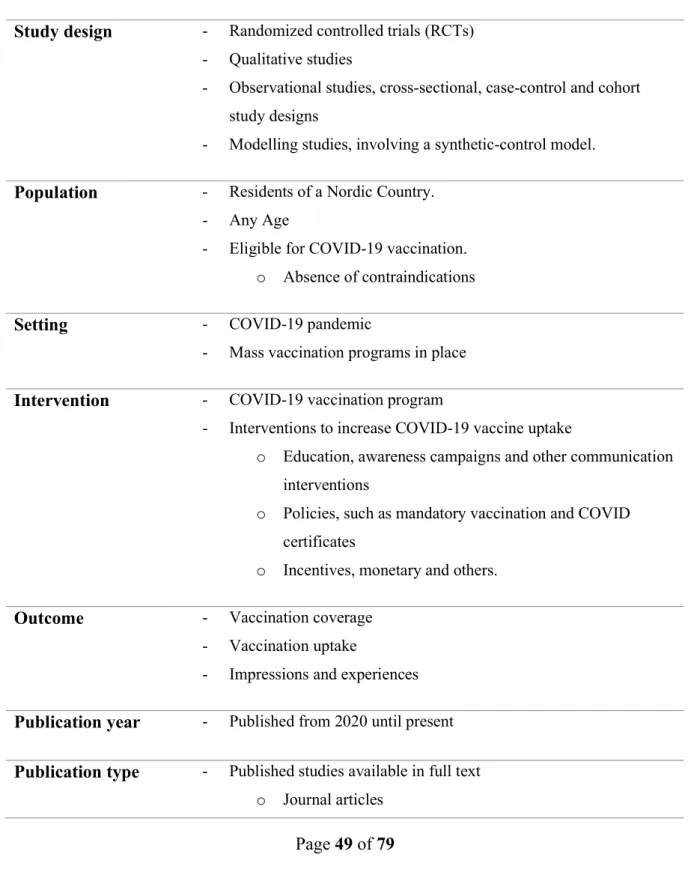
Eligibility criteria
Information sources
Search strategy
Selection of sources of evidence
After completing the first phase of screening, I created a data graph table in Microsoft Excel that was used in the second phase of screening, that is, full text screening, and later was in the data mapping process. All publications that qualify for the second stage of review are listed in the excel sheet data table with their relevant information.
Data charting process
There were some publications for which full text was not available, these are listed in the results section. The “further review” included publications that I was unsure about, which in the case of a research team present could be resolved by consensus between two reviewers or even with a third reviewer, according to the JBI guidelines for scoping reviews (Peters et al. , 2021).
Critical appraisal
The decisions made for these documents were classified into three categories: exclusion, inclusion and a third category labeled "further assessment". Instead, in my case, I re-read the publications in that category and reviewed them in detail against the inclusion criteria to make my final decision.
Synthesis of results
Selection of sources of evidence
Characteristics of sources of evidence
Geographic representation of included studies
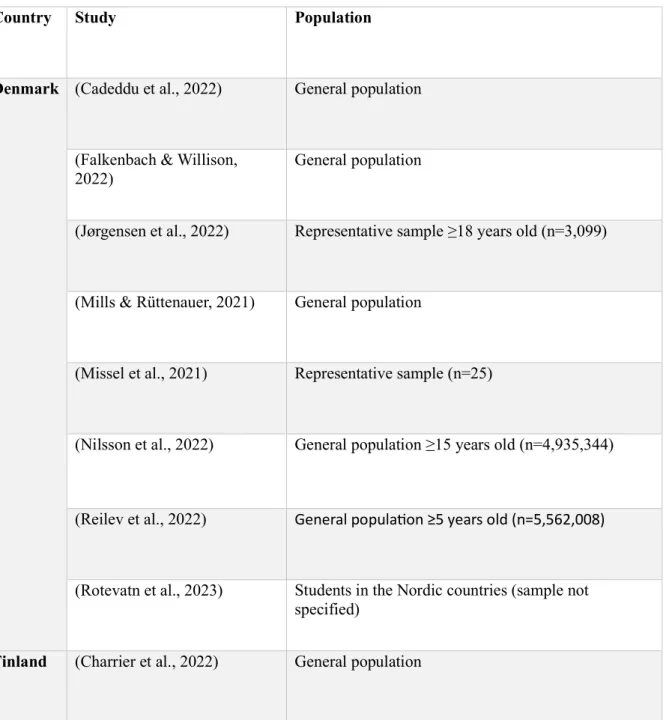
Each study included at least one of the Nordic countries in its population. Eight studies represented Denmark, five Sweden, Finland and Norway were present in three studies each, and Iceland was included in only one of the publications.
Populations in the included studies
Objectives and study characteristics
To compare the vaccination rate of COVID-19 in risk groups with the vaccination rate of the general population of Denmark. Exploring COVID-19 infection patterns and vaccination rates among students under 12 during the fall 2021 semester.
Results of individual sources of evidence
Key concepts and definitions
It provides an explanation of the governance and division of responsibilities in the country's national COVID-19 vaccination campaign. It includes approaches to alleviate concerns about vaccination and increase acceptance of vaccination against COVID-19.
Interventions, strategies, and concepts in included studies
Results of the studies
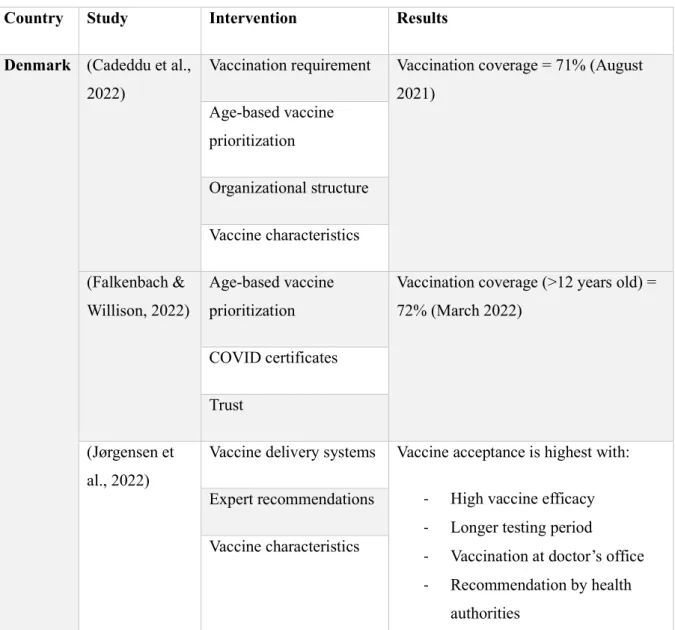
Study findings by intervention
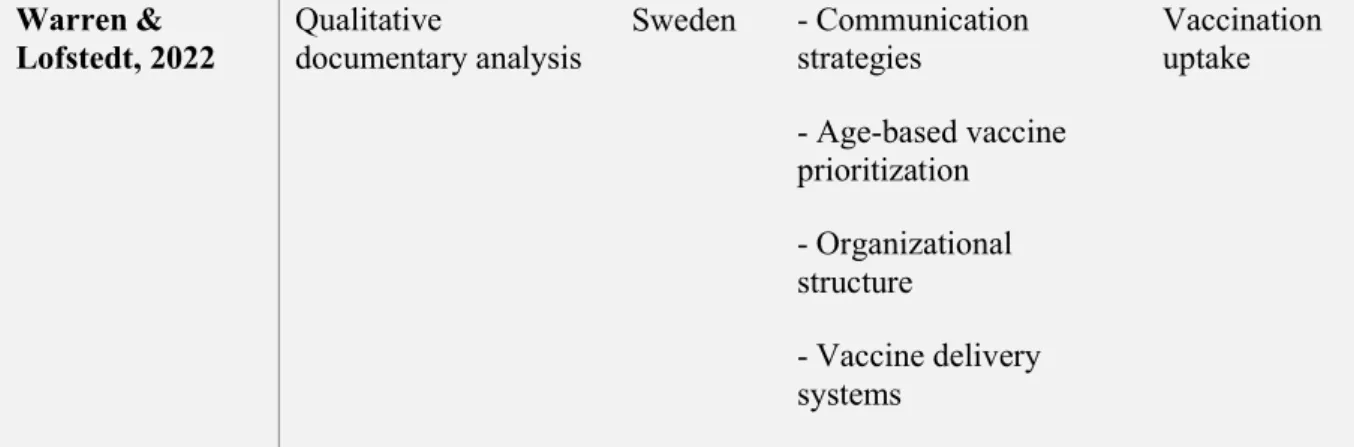
Sweden's efforts achieved vaccination coverage of 74% and 77% fully and partially vaccinated, respectively (Charrier et al., 2022). While Sweden only benefited from vaccination of the older adolescent group, vaccination of the younger adolescent group began after the study period (Rotevatn et al., 2023). Norway and Sweden had the lowest vaccination coverage of both adolescent groups (Rotevatn et al., 2023).
Sweden only required a vaccination certificate to attend large indoor gatherings as well as some venues (Charrier et al., 2022). While Sweden resumed its use specifically for the elderly over 65 (Cadeddu et al., 2022). The longer the vaccine test period was and the higher the effectiveness of vaccines was correlated with higher vaccine acceptance in Denmark (Jørgensen et al., 2022).
While the impact is concerned with the health and well-being of the surrounding community; on the other hand; is more pronounced (Missel et al., 2021).
Main findings
For example, a study by Reilev et al. 2022) in Denmark showed a vaccination coverage of 98%. among adults aged 65 to 74, compared to only 48% among children aged 5 to 11, indicating a lower priority for the latter group. A similar pattern was observed in Norway and Sweden, as reported by Rotevatn et al. 2023), where adolescent groups had the lowest vaccination coverage among the Nordic countries. All this hampered planning and resulted in lower vaccination coverage for the general population than originally planned.
In contrast, Denmark achieved relatively high vaccination coverage for the general population through a centralized vaccination campaign. In Denmark and Norway, the complete suspension of AstraZeneca vaccine use, as well as the suspension of Janssen use in Norway's national immunization program, contributed to higher institutional and government confidence. Surprisingly, almost half of the vaccine refusers were found to agree with the statement that vaccination is a good way to prevent COVID-19 (Hammer et al., 2021).
While health concerns and the well-being of the surrounding community were identified as important factors influencing vaccination decisions (Missel et al., 2021).
Strengths and limitations
Therefore, it is important to recognize that each of these studies may have inherent biases. One of these challenges manifested itself in the full-text screening step, when I was unsure about the inclusion of certain publications, so I created a separate category for further review and had to go through the full texts again to ensure of my decision to include them. or exclusion. Nevertheless, I was supported by multiple academics and colleagues where necessary, without compromising or influencing the integrity of the scoping review as an individual project.
This scoping review of COVID-19 vaccination interventions revealed key findings, identifying and mapping the research on this topic in the Nordic countries. The scoping review included several studies that analyzed vaccination policies, practices and outcomes in Denmark, Sweden, Finland, Norway and Iceland. The use of COVID certificates in Denmark and Sweden had a positive impact on vaccination uptake, especially among specific age groups and countries with lower rates.
These insights have implications for future policy development, interventions and global public health, underscoring the importance of ongoing monitoring and research in optimizing vaccination strategies in the face of emerging.
Acknowledgement
Research recommendation
Overview of Strategies to Improve Vaccination Adherence Before and During the COVID-19 Pandemic [Research Support, Non-U.S. FDA Approves First COVID-19 Vaccine https://www.fda.gov/news-events/press-announcements/fda-approves-first-covid-19-vaccine. High but slightly declining COVID-19 vaccine acceptance and reasons for vaccine acceptance, Finland April to December 2020.
The effect of mandatory COVID-19 certificates on vaccine uptake: synthetic control modeling of six countries. Danish citizens' attitudes towards the COVID-19 vaccination program - a qualitative case study using the lens of Bourdieu's practice theory. Changing characteristics over time of individuals receiving COVID-19 vaccines in Denmark: A population-based descriptive study of vaccine uptake.
Coronavirus disease (COVID-19): Herd immunity, lockdowns and COVID-19 https://www.who.int/news-room/questions-and-answers/item/herd-immunity-lockdowns-and-covid-19.
This research project will focus on COVID-19 vaccination programs in the Nordic countries, and the possible interventions studied or implemented to increase vaccination coverage in the Nordic countries. What are the scope and characteristics of existing research on COVID-19 vaccination strategies in the Nordic countries. A recent scoping review by (Andreas et al., 2022) examined studies addressing interventions designed to increase uptake of COVID-19 vaccine, but no systematic review focused on the Nordic countries.
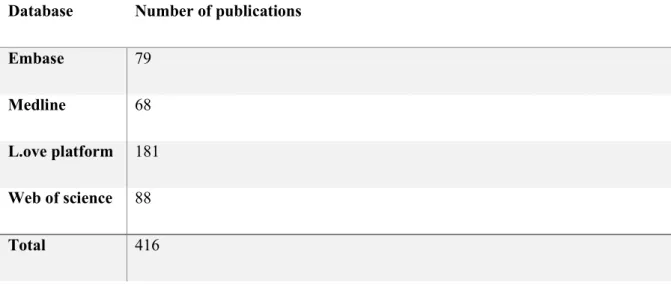
Leads to a more direct model to draw the correlation between vaccination strategies for COVID-19 and their outcomes that can be generalized to the populations of the Nordic countries. This project will consist of a scoping review to identify and analyze the results of studies regarding COVID-19 vaccination programs in the Nordic countries. The literature search will include the following databases: Cochrane Central Register of Controlled Trials (CCTR), Cochrane Database of Systematic Reviews (CDSR), Embase, Medline, Epistemonikos and the WHO COVID-19 Research Database.
The intervention is clearly defined as COVID-19 vaccination, where I will examine the vaccination strategy and application approach.
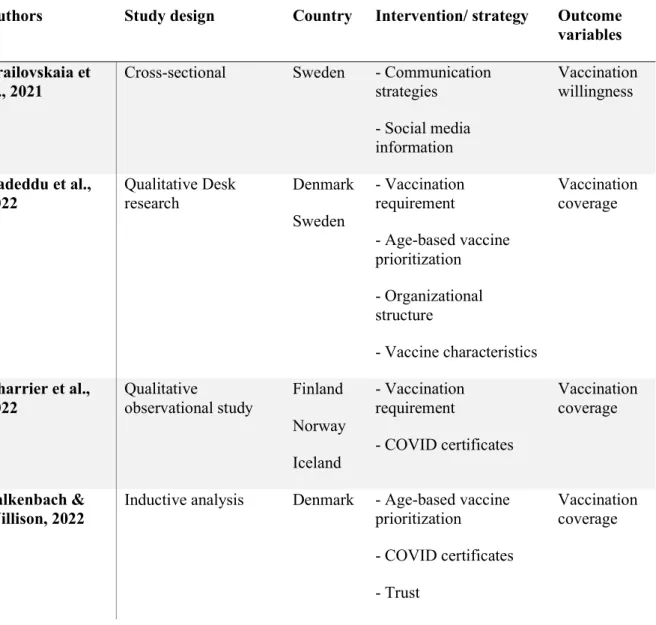
Title Planning and organization of the COVID-19 vaccination campaign: An overview of eight European countries. Study objective(s) - To assess the planning and organizational tactics of COVID-19 vaccination campaigns until August 2021. Study Objective(s) - To explore different childhood vaccination strategies and their resulting vaccination coverage before the COVID-19 pandemic.
In March 2022, Denmark achieved full vaccination coverage against COVID-19 of 72% of the population over 12 years of age. Objective(s) of the study To assess the attitude of Danes towards the existing vaccination program against COVID-19. The study looked at the proportion of the population partially or fully vaccinated against COVID-19 (one, two or three doses).
Aim(s) of the study To explore patterns of COVID-19 infections and vaccination coverage among students under 12 years of age during the first 12 weeks of the fall semester 2021. Title The Norwegian Way: Policy and Practice of COVID-19 Vaccination Author(s) ) Ingunn Skjesol and Jonathan Q Tritter. Aim(s) of the study - To evaluate the communication strategies and management of the timeline of the spread of the COVID-19 vaccine in the five European countries involved.
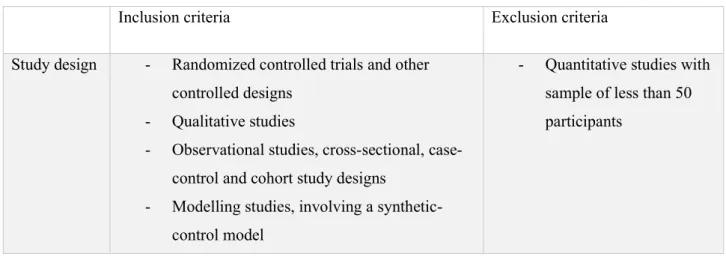
Specify the characteristics of the sources of evidence used as eligibility criteria (eg year, language, and publication status) and provide a rationale. State the process for selecting sources of evidence (ie, screening and eligibility) included in the scoping review. Describe the methods of mapping data from the included sources of evidence (eg, calibrated forms or forms that have been tested by the team before their use and whether the data mapping was done independently or in duplicate) and any processes for obtaining and confirming data from investigators.
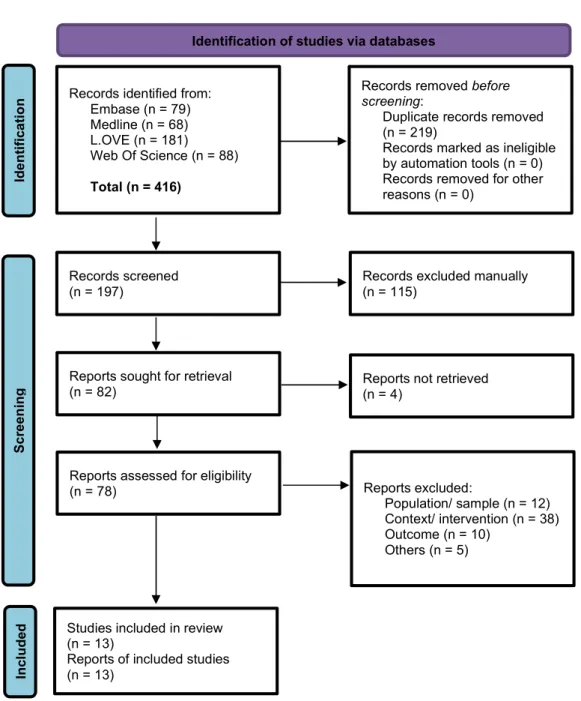
Provide the number of sources of evidence screened, assessed for eligibility and included in the assessment, with the reasons for exclusions at each stage, ideally using a flowchart. Describe the funding sources for the included evidence sources, as well as the funding sources for the scoping review. What sources of evidence (see second footnote) are compiled from, such as bibliographic databases, social media platforms and websites.
This term is used for points 12 and 19 rather than “risk of bias” (which is more applicable to systematic reviews of interventions) to include and acknowledge the different sources of evidence that can be used in a scoping review (e.g. quantitative and/or qualitative research, expert opinion and policy document).