Celestyal Crystal sustained extensive damage to her bow above the waterline and ahead of the collision bulkhead. The safety investigation concluded that the direct cause of the accident was an incorrect awareness of the dynamic situation.
Vessel, Voyage and Marine CasualtyParticulars
Description ofVessels
Celestyal Crystal
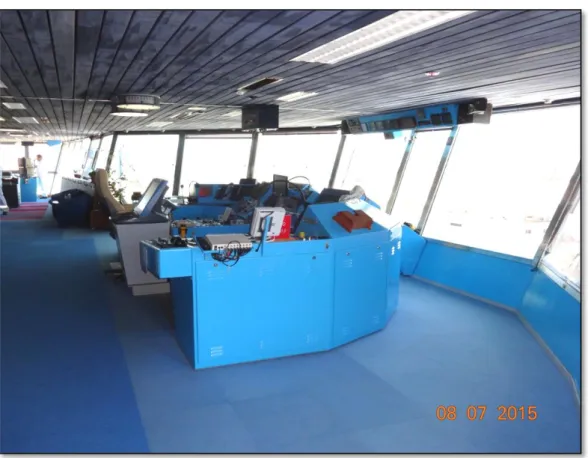
- Bridge layout and equipment on Celestyal Crystal
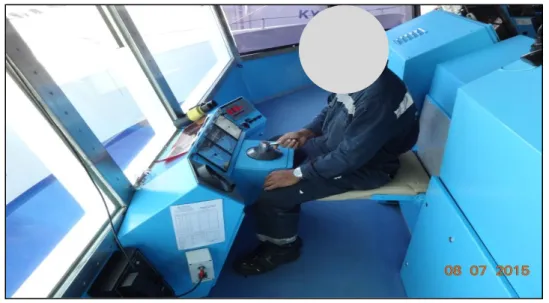
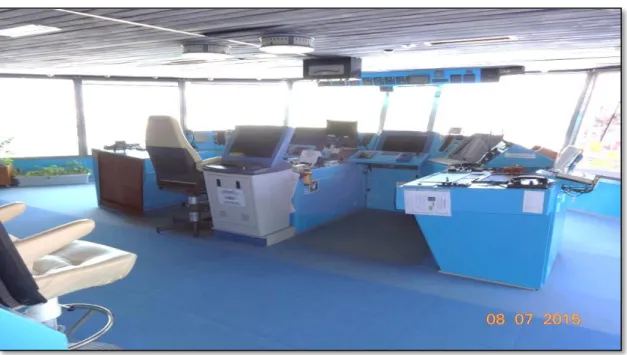
The chart table is located on the starboard side of the main console and the GMDSS master station is located within the bridge area but on the rear left side. The manual steering position is located forward of the main console below the bridge windows (Figure 4).
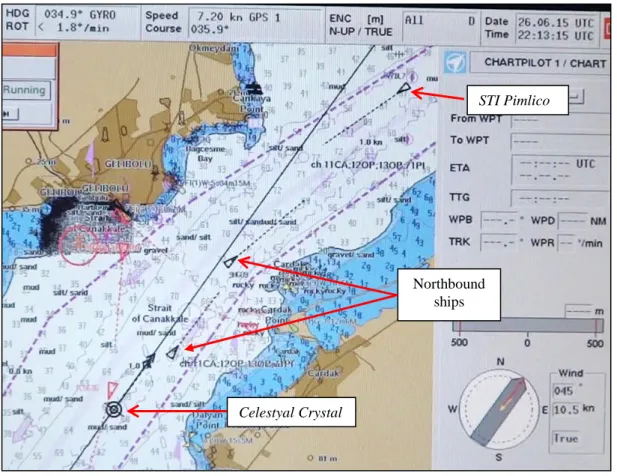
STI Pimlico
The ship had a twin SAM ECDIS used as the main means of navigation. In addition, the ship carried radio equipment that met the requirements of the Global Maritime Distress Safety System (GMDSS).
Manning and Crew on Board Celestyal Crystal
Master
He obtained his certificate of competence in 1998 and had his driver's license renewed in February 2012 for another five years. The captain has been sailing in this rank since 1998 and has gained his experience mainly on cruise ships.
Chief mate (12-4)
He had previously sailed in Celestyal Crystal in 2013 and earlier in 2014 and rejoined Celestyal Crystal on July 11, 2014.
Quartermaster (12-4)
Conduct of Navigational Watch
Environmental Conditions
Narrative
Events dynamics on Celestyal Crystal
- Events leading up to the collision
- Post collision events
Afterwards, the master and chief mate discussed Emona, the first vessel on the starboard bow, which Celestyal Crystal would soon overtake7. The master and chief mate visually saw bright lights ahead and attributed them to the accommodation lights of Emona. At 0118 the master instructed the chief mate to call VTS and Emona, before catching her from the starboard side and asking him if he was happy to take over the con.
At 0124:33 VTS called Celestyal Crystal again and advised the chief mate "please come immediately to your starboard side and proceed with incoming vessel port to port, red to red clear." The chief mate replied “it is not possible to check now. The master returned to the bridge less than a minute after the collision, having felt the impact from his cabin. The master reported the collision to VTS and said he was checking his vessel for damage.
The staff captain checked the collision bulkhead and reported to the master that it was intact with no water ingress. The master looked from the starboard bridge wing and could see damage to the starboard bow and forward decks (Figure 11).
Injuries
The master boarded the patrol boat and on returning made a further announcement at 0247 confirming that the vessel was safe and at anchor.
Damages to Both Vessels
Marine Traffic Regulations
STI Pimlico had to wait at anchor due to northbound tanker traffic in the Straits.
Çanakkale Bogazi
Çanakkale Vessel Traffic Service
Traffic Separation Scheme
Pilotage Service
The Collision Regulations
Purpose
Fatigue and Alcohol
Pilot / master Exchange of Information
Disembarkation of Pilot
The MSIU was unable to determine whether this was the reason for the skipper's minimal reference to ECDIS data during the crucial minutes of the vessel's diversion into the opposite lane of traffic. Furthermore, the safety investigation found no evidence of the pilot's intent or reason for the early departure from the ship or of any navigational advice or instructions given to the Chapter 16.
Overview of the Traffic
Actions of the OOW and Situation Awareness
The OOW then entered into a discussion with the practical officer regarding the brightness of the lights displayed by nearby vessels. In response to his subsequent course changes to port, the OOW waited for the ship's bearing to open. During the course of the safety investigation, the OOW had limited recollection of the events prior to the crash and was unaware that the Celestyal Crystal had entered the.
17 The OOW informed the Turkish Accident Investigation Board that there were bright lights at the rear of the vessel it was overtaking. The lights that the OOW thought were on Emona's stern were actually the deck lights of STI Pimlico, which was preparing to embark the pilot and therefore turned on the deck lights for safe boarding of the pilot19 . Both the Captain and the Apprentice Officer had commented on the bright lighting of Emona's accommodation and the OOW was also certain that he had not mistaken STI Pimlico's lights for Emona's.
The OOW had an animated conversation with the student officer about lights distracting him from effectively monitoring the situation. Thus, even at a stage when the interpretation of the data would not have started yet, the OOW was already experiencing problems that would ultimately jeopardize its assessment of the situation and any subsequent (navigation) decisions it had to make before the collision.
Look-out
When the student officer left the bridge at 1:23 a.m., the chief mate's decisions appeared to be based on a visual observation of lights ahead rather than on the navigational information available to him. The fact that the OOW missed important signals during its navigational watch prompted the safety investigation to analyze the inaccuracy in its awareness of a situation that was dynamic and therefore constantly changing. It is critical for an OOW to keep a constant eye on evolving events as they unfold.
His focus on a particular part of the environment could be considered a disturbance that led to a detachment of the OOW's understanding of the situation and the actual content outside the bridge window. The evidence suggested potential problems with receiving information from the navigation instruments and outside the ship. Celestyal Crystal, it appears that even in light of the factors discussed above, he was unable to make a full assessment of the situation and/or the risk of collision (Rule 7) by taking visual bearings or using the radar effectively.
The apprentice officer was not part of the bridge crew and was not required to remain on the bridge after the master had left20. The safety investigation considers that the absence of a dedicated lookout removed an important measure of control which would have helped the OOW, preoccupied with overtaking another vessel, to establish the true aspect and direction of STI Pimlico.
Risk of Collision and Action to Avoid Collision
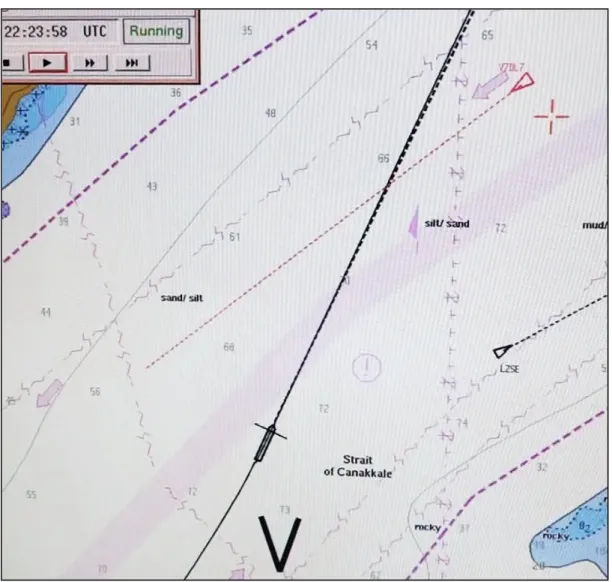
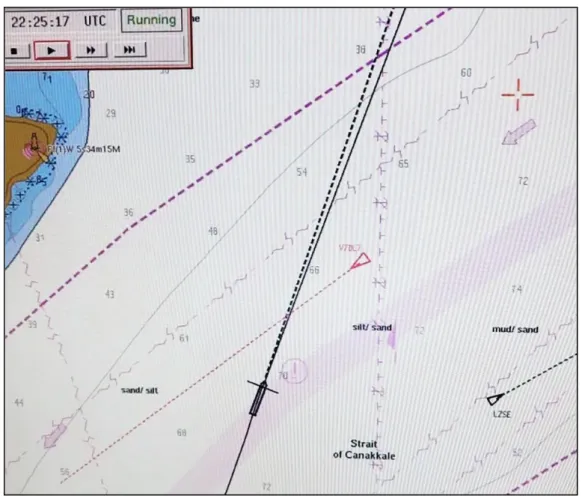
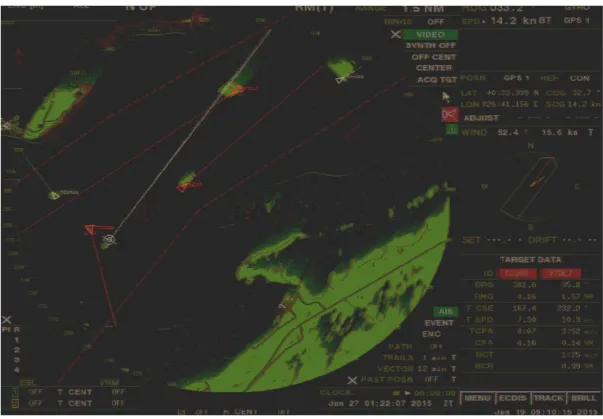
The designation of a second quartermaster on anchors in transit seems to indicate the usual absence of a dedicated lookout, which over time and with no dedicated lookout post in place. The radar and ECDIS showed that there was no risk of collision with STI Pimlico and that the initial course change from 35º to 33º was sufficient to safely overtake Emona in accordance with Rule 13. In addition, STI Pimlico (or any other vessel in the environment) ) would not have been aware of any action from Celestyal Crystal, as the changes were of course minor to be immediately apparent.
Ergonomics of the Navigational Equipment
The position of the new radar at the end of the 'T' was not ideal, as the console layout was originally designed so that the operator sat in a chair and had a view of all the instruments grouped in front of him. It could not be ruled out that the position of the radar and ECDIS may have contributed to the inaccurate situational awareness of the first mate. The steering position was unusual in that the helmsman sat in a seat in front of the console when manual steering was engaged.
This meant that he would have had to look down most of the time (Figure 4) and therefore be ineffective as a lookout without assistance to the OOW, apart from steering the vessel.
Bridge Team Management
It is clear that the actions of the OOW were instigated by incomplete and inaccurate external representations, related to temporal and spatial elements of the situation outside the bridge, and which were the result of the interpretation of data received from different sources.
Actions to Inform Passengers After the Collision
Post Collision Support to the Master
This has prevented the captain from fully concentrating on managing the overall emergency, such as, for example, carrying out an early personnel count, which was only done after being requested by the company.
Actions by STI Pimlico
Immediate Safety Factor – Celestyal Crystal
Latent Conditions and other Safety Factors – Celestyal Crystal
9 Before changing the vessel's course, the OOW did not determine the position of the vessel or determine whether there was any risk of collision with the two vessels in the immediate vicinity;. 11 It is not excluded that the chief mate's position behind the Kelvin Hughes radar limited his view of the ECDIS screen, which is located on the main console, and may have contributed to the chief mate's inaccurate situational awareness;. 12 The helm position was designed in such a way that it required the helmsman to look down most of the time and was therefore ineffective as a vantage point with no assistance to the OOW other than steering the vessel.
Other Findings – Celestyal Crystal
7 The deck lights of the STI Pimlico lit to board the pilot obscured its navigation lights. 8 Management experience with issues related to ECDIS and preparation of itinerary form with an approved list of paper charts for port of destination raises doubts on board Celestyal Crystal as to the reliability of ECDIS.
Latent Conditions and other Safety Factors – STI Pimlico
In the light of the conclusions drawn and taking into account the safety actions taken during the safety investigation. 10/2016_R1 conduct a series of navigation audits on board vessels it manages to obtain qualitative information on how the company's bridge requirements and procedures are being implemented; 10/2016_R2 review the lessons learned in this safety investigation report regarding the support available to the captain in the event of an emergency;
10/2016_R3 revise emergency procedures and training to take into account lessons learned from this safety investigation;. 10/2016_R4 ensure that masters serving on board the Company's ships sailing through the Turkish Straits keep in touch with VTS. 10/2016_R5 ensures that pilotage services are organized between pilotage stations located at each end of the Canakkale Strait.
01:17 Cpt GR) Instructs to overtake another vessel from port side, to request other vessel to “move a little to starboard”.